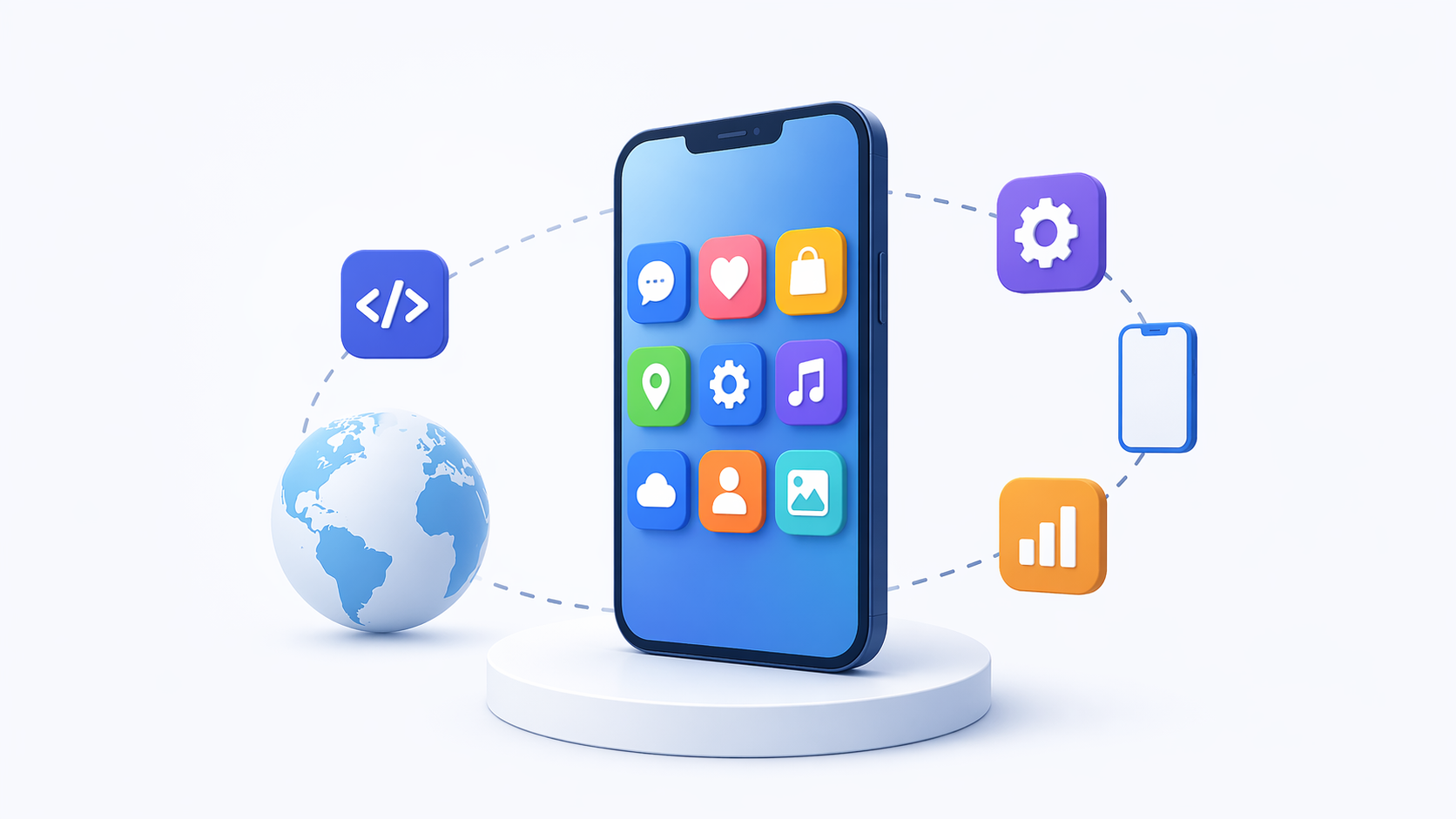
In today’s fast-paced digital landscape, mobile apps have become an integral part of our daily lives. From checking the weather to managing finances, mobile apps provide solutions for almost everything. As the demand for mobile applications continues to grow, understanding the fundamentals of app programming and development is crucial for anyone looking to enter the tech industry or enhance their business with mobile solutions.
Summary
This guide surveys the mobile app landscape, covering core programming concepts, key languages (Swift, Objective-C, Kotlin, Java), and the trade-offs among native, hybrid, and cross-platform approaches. It highlights essential tools (IDEs, prototyping, testing), the role of development companies, and the rise of no-code platforms. Emerging trends like AI/ML, IoT, and 5G are explored alongside practical advice for selecting solutions, collaborating with experts, and iterating based on user feedback. The focus is on aligning app strategy with user needs, business goals, security, performance, and long-term scalability.
The Ubiquity of Mobile Apps
Daily Integration
Mobile apps have seamlessly integrated into our daily routines, transforming how we communicate, work, and entertain ourselves. Whether it’s setting a morning alarm, catching up on news, or ordering food, mobile apps play a pivotal role in enhancing convenience and efficiency.
Economic Impact
The mobile app industry significantly contributes to the global economy. With millions of apps available across platforms, the industry generates substantial revenue and creates numerous job opportunities. Understanding the economic potential of mobile apps can inspire entrepreneurs and developers to innovate and capitalize on emerging trends.
Future Prospects
The future of mobile app development is promising, with advancements in technology paving the way for more sophisticated and immersive applications. As technologies like artificial intelligence, augmented reality, and blockchain continue to evolve, mobile apps will become even more integral to personal and professional spheres.
Understanding App Programming
App programming involves creating software applications that run on mobile devices. Developers use various programming languages and tools to build these apps, ensuring they work seamlessly on different mobile platforms. Whether you’re an aspiring developer or a business owner interested in mobile technology, understanding the basics of app programming is essential.
Core Programming Languages
Swift and Objective-C for iOS
For iOS app development, Swift and Objective-C are the primary programming languages. Swift, known for its modern syntax and safety features, is increasingly favored for new iOS projects. Objective-C, while older, remains relevant for maintaining legacy applications, highlighting the importance of adaptability in app programming.
Kotlin and Java for Android
Android development predominantly utilizes Kotlin and Java. Kotlin, with its concise syntax and enhanced safety features, has become the preferred choice for developers. Java, however, remains a robust option for developers familiar with its extensive libraries and frameworks, emphasizing the need for understanding both languages.
Cross-Platform Development
Cross-platform development frameworks, such as React Native and Flutter, allow developers to write code once and deploy it on multiple platforms. This approach reduces development time and costs, making it an attractive option for businesses seeking wider reach without compromising on performance.
Development Tools and Environments
Integrated Development Environments (IDEs)
IDEs like Android Studio and Xcode provide developers with comprehensive environments for writing, testing, and debugging code. These tools streamline the development process, offering features like code completion, syntax highlighting, and version control integration.
Version Control Systems
Version control systems, such as Git, are crucial for managing code changes and collaborating with team members. They enable developers to track modifications, revert to previous versions, and collaborate efficiently, ensuring a smooth development workflow.
App Testing and Debugging
Testing and debugging tools, including Appium and TestFlight, are essential for ensuring app functionality and performance. Automated testing frameworks help identify bugs and compatibility issues across devices, allowing developers to deliver robust and reliable applications.
Native vs. Hybrid Apps

One of the first decisions in app development is choosing between native and hybrid apps. Native apps are built specifically for one platform, such as iOS or Android, using platform-specific programming languages. They offer better performance and access to device features but require separate development for each platform.
Advantages of Native Apps
Performance and Optimization
Native apps deliver superior performance due to their direct integration with the device’s operating system. This allows for faster load times, smoother animations, and seamless interactions, providing users with a high-quality experience.
Access to Device Features
Native apps have full access to device features such as the camera, GPS, and microphone. This enables developers to create feature-rich applications that leverage hardware capabilities, enhancing user engagement and functionality.
User Experience and Interface Design
Native apps benefit from adherence to platform-specific design guidelines, ensuring a consistent and intuitive user interface. This familiarity enhances user satisfaction and encourages greater app adoption and retention.
Benefits of Hybrid Apps
Cost-Effectiveness
Hybrid apps, built using web technologies like HTML, CSS, and JavaScript, allow for a single codebase across multiple platforms. This reduces development time and costs, making hybrid apps an attractive option for startups and businesses with limited budgets.
Faster Development Cycle
The shared codebase of hybrid apps accelerates the development process, enabling faster time-to-market. This agility is particularly beneficial for businesses seeking to rapidly deploy applications and gain a competitive edge.
Simplified Maintenance
Maintaining a single codebase simplifies updates and bug fixes, reducing the complexity and effort required for app maintenance. This efficiency ensures that apps remain up-to-date with minimal disruption to users.
Considerations for Choosing Between Native and Hybrid
Project Requirements and Objectives
The choice between native and hybrid apps depends on the specific requirements and objectives of the project. Factors such as target audience, desired features, and budget constraints play a crucial role in determining the most suitable approach.
Long-Term Scalability
For projects anticipating significant growth and expansion, native apps may offer better scalability and future-proofing. However, hybrid apps provide flexibility and adaptability, making them suitable for evolving business needs.
User Expectations and Preferences
Understanding user expectations and preferences is vital in selecting the right app development strategy. Native apps may be preferred for performance-critical applications, while hybrid apps offer convenience for users across various platforms.
The Role of Mobile App Development Companies
Mobile app development companies play a pivotal role in bringing innovative ideas to life. These companies offer expertise in app design, development, and deployment, providing end-to-end solutions for businesses and entrepreneurs.
Services Offered by Mobile App Development Companies
Custom App Development
Mobile app development companies specialize in creating custom applications tailored to the unique needs of their clients. This involves understanding the client’s vision, conducting market research, and designing apps that align with business objectives and user expectations.
App Modernization and Maintenance
In addition to new app development, these companies offer app modernization and maintenance services. This ensures that existing apps remain relevant, secure, and compatible with the latest technologies, enhancing their longevity and performance.
User Experience and Interface Design
A key service provided by development companies is user experience (UX) and interface design. By focusing on usability and aesthetics, these companies create engaging and intuitive apps that resonate with users, fostering brand loyalty and satisfaction.
Evaluating Mobile App Development Companies
Experience and Expertise
When selecting a mobile app development company, consider their experience and expertise in the industry. A company with a proven track record and diverse portfolio is more likely to deliver successful outcomes and innovative solutions.
Client Testimonials and Reviews
Client testimonials and reviews provide valuable insights into the quality of a company’s services. Positive feedback from past clients indicates reliability, professionalism, and a commitment to client satisfaction, guiding informed decision-making.
Technological Proficiency and Innovation
Assessing a company’s proficiency in the latest technologies and development trends is crucial. Companies that demonstrate innovation and a willingness to adopt cutting-edge tools are better equipped to deliver forward-thinking and competitive applications.
Industry-Specific Solutions
Healthcare and Fitness Apps
Mobile app development companies often specialize in industry-specific solutions, such as healthcare and fitness apps. These apps require compliance with regulations, secure data handling, and integration with medical devices, making industry expertise essential.
E-commerce and Retail Apps
For businesses in the e-commerce and retail sectors, app development companies create solutions that enhance online shopping experiences. Features like secure payment gateways, personalized recommendations, and seamless navigation are integral to driving sales and customer satisfaction.
Education and E-Learning Apps
In the education sector, app development companies design e-learning solutions that facilitate remote learning and knowledge sharing. Interactive features, multimedia content, and user-friendly interfaces contribute to effective learning experiences and educational success.
No-Code App Builders: A Game Changer

by Bernd 📷 Dittrich (https://unsplash.com/@hdbernd)
The emergence of no-code app builders has revolutionized the app development landscape. These tools allow individuals with little to no programming experience to create functional mobile apps. No-code platforms like nandbox offer drag-and-drop interfaces, pre-built templates, and customizable features, making app creation accessible to a broader audience.
Advantages of No-Code App Builders
Accessibility and Inclusivity
No-code app builders democratize app development by making it accessible to individuals without programming skills. This inclusivity fosters innovation and creativity, empowering a diverse range of people to bring their ideas to life.
Rapid Prototyping and Iteration
These platforms enable rapid prototyping and iteration, allowing users to quickly test and refine their app concepts. This agility facilitates experimentation and innovation, leading to more refined and successful applications.
Cost-Effectiveness and Efficiency
No-code app builders reduce development costs by eliminating the need for extensive coding resources. This cost-effectiveness is particularly beneficial for startups and small businesses, enabling them to compete with larger enterprises.
Limitations and Considerations
Customization and Flexibility
While no-code platforms offer convenience, they may have limitations in terms of customization and flexibility. For complex and highly specialized applications, traditional development methods may be more suitable to meet specific requirements.
Performance and Scalability
No-code apps may face performance limitations and scalability challenges as they grow in complexity and user base. Evaluating the long-term viability of no-code solutions is essential to ensure they align with business goals and user expectations.
Security and Compliance
Ensuring security and compliance is crucial when using no-code platforms, especially for apps handling sensitive data. Developers must assess the security measures and compliance capabilities of the chosen platform to protect user information and maintain trust.
Popular No-Code App Builders
nandbox
nandbox is a true native iOS and Android app builder that distinguishes itself from other no-code platforms. Unlike traditional solutions that wrap web applications in a mobile shell, nandbox allows users to create fully functional, feature-rich apps. Its AI-powered capabilities enable users to develop comprehensive applications merely by providing prompts, simplifying the creation process. This accessibility empowers individuals and businesses to rapidly transform ideas into complete mobile applications while maintaining high performance and user experience.
Glide and Thunkable
Glide and Thunkable specialize in creating mobile apps with intuitive drag-and-drop interfaces. These platforms emphasize ease of use and rapid development, making them ideal for beginners and non-technical users seeking to build functional apps quickly.
AppGyver and AppSheet
AppGyver and AppSheet focus on providing robust no-code solutions for enterprise-grade applications. With features like data integration, workflow automation, and advanced analytics, these platforms support the development of scalable and feature-rich apps for businesses.
Essential Mobile App Tools
Developers rely on a variety of tools to streamline the app development process. These tools assist in designing, testing, and deploying mobile apps efficiently. Some popular mobile app tools include:
Integrated Development Environments (IDEs)
Android Studio and Xcode
Android Studio and Xcode are the primary IDEs for Android and iOS development, respectively. These environments offer powerful features such as real-time code analysis, debugging tools, and integrated emulators, enhancing the efficiency and effectiveness of the development process.
Visual Studio Code and IntelliJ IDEA
For cross-platform and hybrid app development, tools like Visual Studio Code and IntelliJ IDEA are popular choices. These IDEs provide extensive support for various programming languages and frameworks, making them versatile and adaptable to different development needs.
Eclipse and NetBeans
Eclipse and NetBeans are open-source IDEs that offer robust development environments for Java and other programming languages. Their customizable interfaces and extensive plugin ecosystems make them valuable tools for developers seeking flexibility and functionality.
Prototyping Tools
Sketch and Figma
Sketch and Figma are leading prototyping tools for designing interactive app interfaces. These platforms enable designers to create wireframes, mockups, and prototypes with ease, facilitating collaboration and feedback throughout the design process.
Adobe XD and InVision
Adobe XD and InVision provide comprehensive tools for creating dynamic prototypes and user interfaces. Their collaboration features allow design teams to share and iterate on designs efficiently, ensuring a seamless transition from concept to development.
Marvel and Balsamiq
Marvel and Balsamiq offer user-friendly prototyping solutions for creating low-fidelity wireframes and interactive prototypes. These tools are ideal for early-stage design exploration, allowing teams to visualize and refine ideas before moving to detailed design phases.
Testing and Debugging Tools
Appium and Selenium
Appium and Selenium are popular testing frameworks for automating app testing across different platforms and devices. These tools enable developers to perform functional and regression testing, ensuring app reliability and performance.
TestComplete and Calabash
TestComplete and Calabash offer comprehensive testing solutions with support for various testing methodologies, including UI, performance, and load testing. Their robust features help identify and resolve issues, enhancing app quality and user satisfaction.
Firebase Test Lab and Sauce Labs
Firebase Test Lab and Sauce Labs provide cloud-based testing environments for running automated tests on real devices. These platforms enable developers to test apps under real-world conditions, ensuring compatibility and performance across diverse device configurations.
App Development Trends to Watch
Staying informed about app development trends is vital for anyone involved in mobile software creation. Here are some key trends shaping the future of mobile apps:
Artificial Intelligence and Machine Learning
Personalized User Experiences
AI and machine learning are transforming how apps deliver personalized user experiences. By analyzing user data and behavior, apps can offer tailored content, recommendations, and interactions, enhancing user engagement and satisfaction.
Automation and Optimization
Machine learning algorithms automate complex tasks and optimize app performance. From predictive analytics to automated customer support, these technologies streamline operations and improve efficiency, reducing manual effort and enhancing user experiences.
Natural Language Processing
Natural language processing (NLP) enables apps to understand and respond to user queries in natural language. This capability powers voice assistants, chatbots, and language translation features, making apps more interactive and user-friendly.
Internet of Things (IoT) Integration
Smart Home and Automation
The integration of IoT devices with mobile apps is revolutionizing smart home automation. Apps serve as control hubs for managing connected devices, enabling users to monitor and control their homes remotely, enhancing convenience and security.
Healthcare and Wearable Technology
In the healthcare sector, IoT integration allows for remote patient monitoring and data collection through wearable devices. Mobile apps facilitate real-time health tracking and reporting, improving patient care and enabling proactive health management.
Industrial and Smart City Applications
IoT-powered mobile apps are transforming industrial operations and smart city initiatives. From predictive maintenance in manufacturing to traffic management in urban areas, these apps optimize processes, enhance safety, and improve resource utilization.
5G Technology
Enhanced Connectivity and Speed
The rollout of 5G networks is set to revolutionize mobile app experiences by offering enhanced connectivity and speed. With faster data transfer rates and lower latency, apps can deliver real-time interactions and high-quality streaming, improving user satisfaction.
Augmented Reality and Virtual Reality
5G technology enables more immersive augmented reality (AR) and virtual reality (VR) experiences. Apps can leverage these capabilities to create engaging and interactive environments, enhancing gaming, education, and retail experiences.
IoT and Edge Computing
5G’s low-latency connectivity supports the growth of IoT and edge computing, enabling faster data processing and analysis. Mobile apps can leverage these advancements to deliver real-time insights and automate decision-making, enhancing operational efficiency.
Choosing the Right Mobile App Solutions
When selecting mobile app solutions, consider your target audience, business goals, and technical requirements. A well-planned approach ensures that the app meets user needs and aligns with your strategic objectives.
Defining Your App’s Purpose and Audience
Identifying User Needs and Pain Points
Understanding your target audience’s needs and pain points is crucial for developing a successful app. Conducting market research and user surveys can provide insights into user expectations, guiding feature development and design decisions.
Aligning with Business Goals
Your app should align with your business goals and objectives, whether it’s increasing brand awareness, generating revenue, or enhancing customer engagement. Defining clear goals helps prioritize features and functionalities that contribute to achieving desired outcomes.
Evaluating Technical Requirements
Assessing technical requirements, such as platform compatibility, security measures, and integration capabilities, is essential for selecting the right app development approach. These considerations ensure that the app meets performance standards and user expectations.
Collaborating with a Top Mobile App Development Company
Leveraging Expertise and Experience
Partnering with a top mobile app development company provides access to expertise and experience in navigating the complexities of app creation. These companies offer valuable insights and technical skills, ensuring a smooth development process and a successful app launch.
Ensuring Effective Communication and Collaboration
Effective communication and collaboration with the development company are crucial for achieving project success. Establishing clear communication channels and regular progress updates fosters transparency and ensures alignment with project goals.
Managing Budget and Timeline
Working with a development company requires managing budget and timeline expectations. Setting realistic budgets and timelines, along with regular monitoring, ensures that the project stays on track and within scope, minimizing potential delays and cost overruns.
Evaluating Success and Iterating
Measuring App Performance and User Feedback
Post-launch, measuring app performance and gathering user feedback are essential for evaluating success. Analyzing metrics such as user engagement, retention rates, and app ratings helps identify areas for improvement and guide future updates.
Implementing Updates and Enhancements
Based on user feedback and performance analysis, implementing updates and enhancements ensures the app remains relevant and competitive. Regular updates address bugs, introduce new features, and improve user experience, fostering continued user engagement.
Planning for Long-Term Growth
Planning for long-term growth involves anticipating future needs and trends, ensuring the app remains adaptable and scalable. This forward-thinking approach positions the app for sustained success and aligns with evolving business goals and market demands.
Conclusion
Mobile app development is a dynamic field with endless opportunities for innovation. Whether you’re a seasoned developer or a business seeking to expand its digital presence, understanding app programming, leveraging no-code app builders, and staying updated on development trends are key to success. By choosing the right mobile app development company and tools, you can create impactful mobile solutions that drive growth and engagement in today’s tech-driven world.
Embracing Technological Advancements
Staying Ahead of the Curve
In the rapidly evolving tech landscape, staying ahead of the curve is crucial for maintaining a competitive edge. Embracing technological advancements, such as AI, IoT, and 5G, ensures that your mobile app remains innovative and aligned with future trends.
Fostering Innovation and Creativity
Encouraging a culture of innovation and creativity within your development team can lead to groundbreaking app solutions. By fostering an environment that values experimentation and risk-taking, you can unlock new possibilities and drive industry-leading advancements.
Building a Sustainable Digital Presence
Building a sustainable digital presence requires continuous adaptation and improvement. By leveraging insights from user feedback and market trends, you can ensure that your mobile app remains relevant, valuable, and capable of meeting evolving user expectations.
Frequently Asked Questions
How do I decide between native, hybrid, and cross-platform approaches for my app?
Start with your project’s requirements, budget, and user expectations. Choose native (Swift/Objective-C for iOS; Kotlin/Java for Android) when you need top-tier performance, deep access to device features (camera, GPS, sensors), and platform-specific UI with long-term scalability. Opt for hybrid or cross-platform (e.g., React Native, Flutter) when speed to market, cost-effectiveness, and a single codebase across platforms are priorities. Hybrid/cross-platform can get you broad reach faster and simplify maintenance, but may introduce trade-offs in performance, some device integrations, and long-run scalability compared to fully native builds.
Which programming language or framework should I learn first for mobile development?
Align your choice with your target platform and goals. For iOS-focused work, learn Swift (Objective-C remains useful for legacy maintenance). For Android, start with Kotlin (Java is still relevant due to its libraries and existing codebases). If your aim is to serve both iOS and Android from one codebase, consider cross-platform frameworks like React Native or Flutter to accelerate delivery while maintaining solid performance.
When is a no-code app builder the right choice, and what are the trade-offs?
Use no-code platforms when you need accessibility, rapid prototyping, and cost-efficiency, ideal for MVPs, internal tools, and testing market fit without a large engineering team. Tools like nandbox, Glide, Thunkable, AppGyver, and AppSheet offer drag-and-drop UIs, templates, integrations, and analytics that speed up creation. The trade-offs include limits on customization and flexibility, potential performance and scalability constraints as your app grows, and the need to vet security and compliance—especially for sensitive data or regulated industries.
What tools are essential across the app development lifecycle?
- Design and prototyping: Sketch and Figma for wireframes and interactive UI; Adobe XD and InVision for dynamic prototypes and collaboration; Marvel and Balsamiq for quick, low-fidelity exploration.
- Development: Android Studio (Android) and Xcode (iOS) for full-featured IDE support; Visual Studio Code and IntelliJ IDEA for cross-platform/hybrid workflows; Eclipse and NetBeans for Java-centric projects; use Git for version control and team collaboration.
- Testing and debugging: Appium and Selenium for automated functional/regression testing; TestComplete and Calabash for comprehensive UI/performance testing; Firebase Test Lab and Sauce Labs for cloud-based real-device testing; TestFlight to distribute and test iOS builds with users.
How should I evaluate and choose a mobile app development company?
Look for a strong track record and domain expertise, validated by a diverse portfolio and positive client testimonials/reviews. Prioritize partners who demonstrate technological proficiency and innovation, communicate clearly, collaborate effectively, and manage budget/timeline transparently. Ensure they offer services you need—custom development, UX/UI design, modernization, and maintenance—and verify industry-specific capabilities (e.g., compliance and secure data handling for healthcare, seamless payments for e-commerce, and engaging e-learning features for education).