
In today’s fast-paced technological landscape, the pursuit of efficiency is more critical than ever. As businesses and individuals navigate a world where time is a valuable commodity, finding ways to streamline processes is essential. Enter drag and drop scripting tools, an innovative solution that empowers users to automate tasks and create complex workflows without the need for traditional coding expertise. Modern no-code platforms, including solutions such as nandbox, Zapier, and Bubble, use visual interfaces to help users assemble applications and automate workflows without writing code.
In this comprehensive article, we’ll delve into the transformative world of drag and drop scripting tools, exploring their significance, functionalities, and the key players dominating the market. Whether you are a small business owner seeking to optimize operations, a tech enthusiast eager to explore new frontiers, or someone looking to simplify everyday processes, this guide will offer invaluable insights into the realm of no-code solutions.
Summary

This article explores how drag-and-drop no-code tools democratize software creation by enabling non-developers to build applications and automate workflows through visual interfaces. It highlights key benefits—speed, cost savings, usability, flexibility, and collaboration—and profiles leading platforms such as nandbox, Zapier, Bubble, and Integromat. It also examines limitations around customization, security, and integration, and looks ahead to AI- and ML-driven advances. Use cases span business process automation and custom application development across industries and organization sizes.
No-code tools represent a paradigm shift in software development.
These platforms provide a visual interface where users can assemble applications and automate workflows without writing code. This approach democratizes technology, making it accessible to a broader audience.
By simplifying the development process, no-code tools empower individuals with no technical background to create functional software. Users can drag and drop elements, configuring them to build applications that meet their needs. This ease of use allows businesses to innovate quickly, reducing the dependency on traditional development cycles.
The visual nature of no-code platforms fosters creativity and experimentation.
Users can prototype ideas rapidly, iterating on them without the constraints of coding. This flexibility enables a more agile approach to problem-solving, encouraging diverse perspectives in application development.
The rise of no-code tools didn’t happen overnight; it was a gradual evolution fueled by the growing demand for more accessible technology solutions. Initially, these tools were simple and limited in scope, but advancements in technology have expanded their capabilities significantly.
Early iterations of no-code platforms were primarily focused on basic website building. However, as the technology matured, these tools began to offer more robust functionalities, including the ability to develop full-fledged applications and automate complex workflows. This evolution has allowed no-code tools to become indispensable in various sectors, from education to healthcare.
The popularity of no-code tools has surged in recent years, driven by the need for cost-effective and efficient solutions. Businesses are increasingly recognizing the value of empowering their teams with tools that reduce reliance on traditional software development. This shift is not just a trend but a transformative movement that is reshaping the technological landscape.
One of the most profound impacts of no-code tools is the democratization of technology. By lowering the barrier to entry, these tools enable individuals and organizations to leverage technology in ways that were previously inaccessible.
For small businesses and startups, no-code tools offer an opportunity to compete with larger enterprises. They can quickly develop and deploy applications tailored to their specific needs, without the financial burden of hiring dedicated development teams. This democratization fosters innovation, as more people can bring their ideas to life.
Educational institutions are also benefiting from the democratization of technology through no-code tools. Students and educators can use these platforms to create educational apps and tools, enhancing the learning experience. As technology becomes more integrated into everyday life, the ability to utilize these tools will become an essential skill for future generations.
Drag and drop scripting tools are designed with simplicity in mind, making them accessible to users of all skill levels. The intuitive interfaces allow individuals to create applications and automate tasks with minimal training. This ease of use shifts the focus from the technical intricacies of coding to the creative and strategic aspects of problem-solving.
The simplicity of these tools encourages exploration and experimentation. Users can try out different configurations and workflows without fear of making irreversible mistakes. This environment fosters innovation, as individuals feel more confident in their ability to create and iterate.
For businesses, the ease of use translates to faster onboarding and reduced training costs. Team members can quickly become proficient with these tools, allowing organizations to implement solutions more rapidly. This agility is crucial in today’s competitive landscape, where the ability to adapt quickly can determine success or failure.
Time is a precious resource, and drag and drop scripting tools are designed to maximize it.
By eliminating the need to write extensive code, these tools significantly reduce the time required to develop applications. This efficiency is particularly beneficial for businesses looking to deploy solutions quickly to maintain a competitive edge.
The visual nature of these tools allows for rapid prototyping and iteration. Users can quickly assemble applications, test them, and make adjustments as needed. This iterative process ensures that solutions are refined and optimized before full-scale deployment, saving time and resources in the long run.
The time savings extend beyond the development phase. Once an application is deployed, ongoing maintenance and updates can be handled more efficiently. Users can make changes to workflows or applications without the need for lengthy development cycles, ensuring that solutions remain relevant and effective.
Traditional software development can be a costly endeavor, often requiring skilled developers, extensive time commitments, and significant financial investment. No-code tools offer a cost-effective alternative by empowering existing team members to create applications, thus reducing the need for additional hiring and training expenses.
The financial benefits of no-code tools extend beyond initial development costs. By enabling in-house teams to handle application development and maintenance, businesses can reduce their reliance on external vendors. This autonomy allows organizations to allocate their budgets more strategically, investing in other areas that drive growth and innovation.
For startups and small businesses, the cost-effectiveness of no-code tools can be a game-changer. These organizations can leverage technology to scale their operations and compete with larger players without the financial burden of traditional development. This level playing field encourages entrepreneurship and innovation across industries.
In a rapidly changing business environment, flexibility and adaptability are essential attributes for success. Drag and drop scripting tools offer unparalleled flexibility, enabling users to modify workflows and applications as needed. This adaptability allows businesses to pivot quickly, responding to market changes and emerging opportunities.
The modular nature of these tools means that users can easily add or remove components, tailoring applications to meet evolving needs. This flexibility extends to integrations with other software and systems, ensuring that applications remain compatible with existing infrastructure.
For organizations operating in dynamic industries, the ability to adapt quickly can be a significant competitive advantage. Drag and drop scripting tools provide the means to innovate and evolve, ensuring that businesses remain agile and responsive to change.
nandbox is one example of a platform that applies drag-and-drop scripting concepts to mobile application development. The platform focuses on helping users build native mobile apps through visual interfaces, allowing entrepreneurs and businesses to assemble app features and workflows without traditional coding. Platforms like nandbox illustrate how no-code tools are expanding beyond workflow automation into full mobile application development.
The platform’s user-friendly interface empowers users to design and deploy applications efficiently. With a wide array of customizable features and templates, nandbox caters to various industries and use cases. This versatility has made it a popular choice for businesses looking to develop mobile solutions quickly and cost-effectively.
nandbox’s commitment to scalability ensures that applications can grow alongside the businesses that use them. As organizations expand, the platform provides the necessary tools and support to accommodate increased demands and complexities.
Zapier is a well-known name in the no-code space, celebrated for its extensive automation capabilities. The platform excels at connecting various applications and services, enabling users to automate repetitive tasks seamlessly. This connectivity enhances workflow efficiency, allowing businesses to focus on strategic initiatives rather than manual processes.
With Zapier, users can create “Zaps,” which are automated workflows that link different applications. These Zaps can be customized to perform a wide range of tasks, from sending email notifications to updating CRM records. The platform’s flexibility and ease of use make it an invaluable tool for businesses seeking to optimize their operations.
Zapier’s extensive library of integrations ensures compatibility with a vast array of applications, making it a versatile solution for organizations of all sizes. This broad compatibility allows businesses to leverage their existing software investments while enhancing overall efficiency.
Bubble is another standout platform in the no-code market, known for its versatility and capability to build web applications with complex functionality. Its visual interface allows users to create sophisticated applications without writing a single line of code, making it an attractive option for both individuals and businesses.
The platform’s drag and drop editor provides users with a blank canvas to design and develop web applications tailored to their specific needs. Bubble offers a wide range of pre-built elements and plugins, enabling users to add features and functionality with ease. This flexibility makes it possible to create applications that are both unique and highly functional.
Bubble’s robust capabilities are complemented by a supportive community and extensive documentation, providing users with the resources they need to succeed. Whether building a simple website or a complex enterprise application, Bubble offers the tools and support necessary to bring ideas to life.
Integromat is a powerful automation platform that connects applications and services, enabling seamless workflow automation. Its visual interface allows users to create complex integrations and automate processes without the need for coding knowledge. This capability makes Integromat an essential tool for businesses seeking to optimize their operations.
The platform’s modular design allows users to build custom workflows by connecting various applications and services. Integromat offers a wide range of pre-built templates and modules, making it easy to get started and customize solutions to meet specific needs. This flexibility ensures that businesses can automate a wide range of processes, from simple tasks to complex workflows.
Integromat’s commitment to reliability and scalability makes it a trusted solution for organizations of all sizes. As businesses grow and their needs evolve, the platform provides the tools and support necessary to maintain efficient and effective operations.
Automating business processes with drag and drop scripting tools
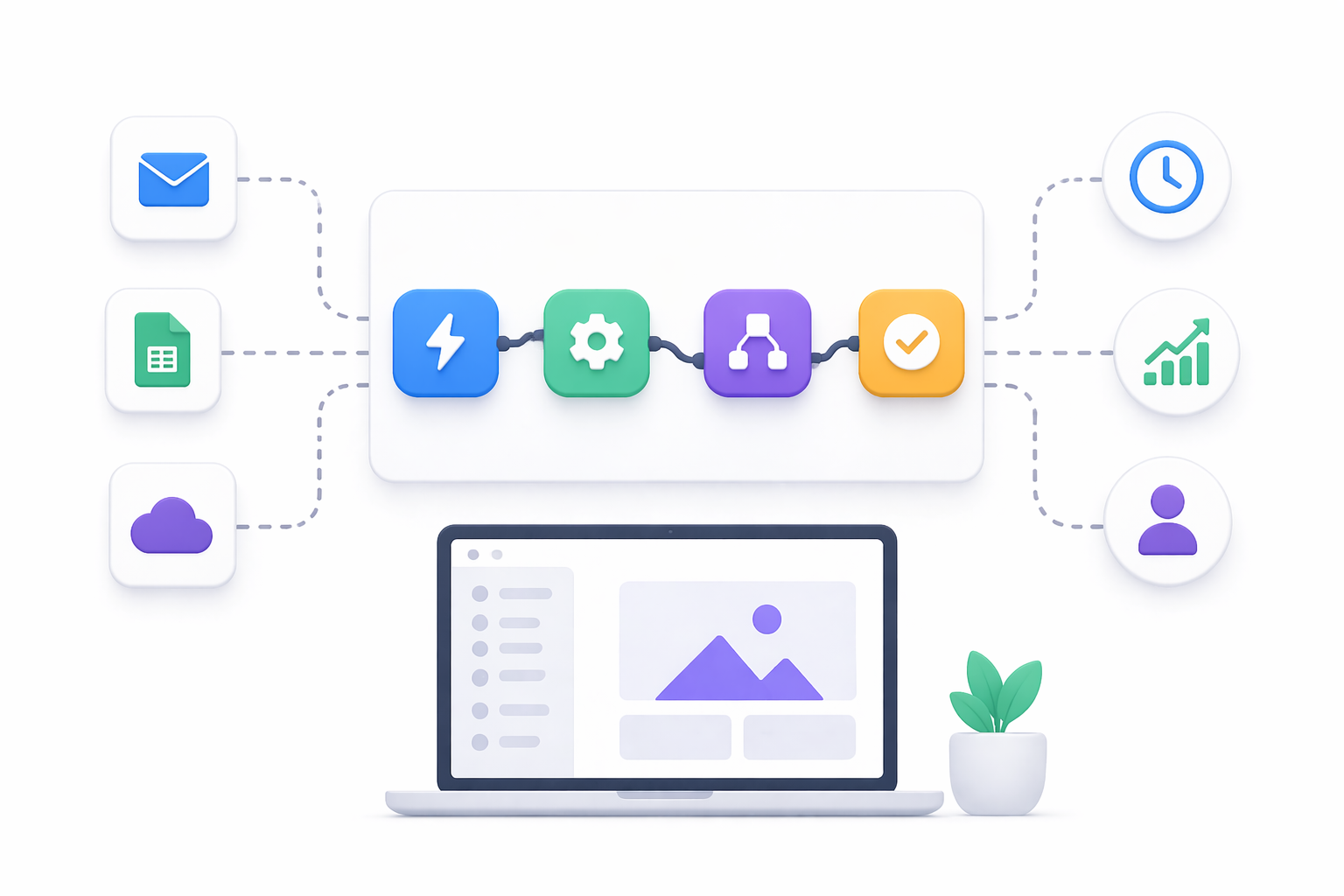
By automating routine tasks, businesses can improve efficiency and allocate resources to more strategic initiatives. This shift in focus allows organizations to drive innovation and growth.
The automation of business processes can encompass a wide range of activities, from managing customer relationships to optimizing supply chains. By leveraging drag and drop tools, businesses can create workflows that enhance productivity and reduce operational costs. This efficiency is crucial in maintaining a competitive edge in today’s fast-paced market.
For many organizations, the ability to automate business processes translates to improved accuracy and consistency. Automated workflows reduce the risk of human error, ensuring that tasks are completed accurately and on time. This reliability enhances customer satisfaction and strengthens business relationships.
Businesses can leverage drag and drop scripting tools to develop custom applications tailored to their specific needs. This capability allows organizations to address unique challenges and opportunities, providing a competitive edge in their respective industries. By developing custom solutions, businesses can optimize their operations and deliver enhanced value to their customers.
The flexibility of drag and drop tools enables businesses to experiment with different application designs and functionalities. This iterative approach ensures that solutions are refined and optimized before deployment, maximizing their impact. By aligning applications with business objectives, organizations can achieve greater efficiency and effectiveness.
Custom application development also empowers businesses to respond to changing market dynamics and customer needs. By leveraging drag and drop tools, organizations can quickly adapt their solutions, ensuring that they remain relevant and competitive in a rapidly evolving landscape.
No-code tools foster enhanced collaboration by allowing team members from different departments to contribute to application development. This cross-functional approach encourages diverse perspectives and fosters innovation, ensuring that applications meet the needs of all stakeholders.
By breaking down silos, no-code tools enable teams to work together more effectively, sharing ideas and insights to create solutions that drive business success. This collaborative environment promotes a culture of innovation, where team members feel empowered to contribute to the development process.
The ability to collaborate across departments also ensures that applications are aligned with organizational goals and objectives. By involving stakeholders from various areas of the business, no-code tools facilitate the creation of solutions that address the needs of the entire organization, enhancing overall effectiveness.
While no-code tools offer numerous benefits, they may have limitations in terms of customization and scalability. Complex applications may still require traditional coding to achieve desired functionality. It’s important for businesses to evaluate the capabilities of no-code tools in the context of their specific needs and objectives.
For some organizations, the limitations of no-code tools may necessitate a hybrid approach, combining the ease of use of no-code platforms with the flexibility of traditional coding. This approach allows businesses to leverage the strengths of both methodologies, creating solutions that are both innovative and effective.
It’s also essential for businesses to consider the long-term implications of relying solely on no-code tools. As organizations grow and their needs evolve, the limitations of these platforms may become more apparent. By planning for the future, businesses can ensure that their technology solutions remain aligned with their strategic goals.
As with any technology, security is a concern when using no-code tools. It’s essential for businesses to choose platforms with robust security features to protect sensitive data and ensure compliance with industry regulations. This consideration is particularly important in industries with strict data protection requirements, such as healthcare and finance.
By evaluating the security features of no-code platforms, businesses can mitigate potential risks and safeguard their data. This evaluation should include an assessment of the platform’s encryption protocols, access controls, and compliance with relevant regulations. By prioritizing security, organizations can confidently leverage no-code tools to drive innovation and growth.
In addition to platform security, businesses should also consider the potential risks associated with user error. Providing training and support for team members using no-code tools can help minimize these risks, ensuring that applications are developed and maintained securely.
Integrating no-code applications with existing systems can be challenging, particularly for organizations with complex IT infrastructures. It’s crucial for businesses to evaluate the compatibility of no-code tools with their current systems to avoid potential disruptions and ensure seamless operations.
By conducting a thorough assessment of their existing infrastructure, businesses can identify potential integration challenges and develop strategies to address them. This assessment should include an evaluation of the data flow between systems, as well as the compatibility of APIs and other integration points.
For organizations with complex integration needs, partnering with a technology consultant or integration specialist can be beneficial. These experts can provide guidance on best practices and help businesses navigate the complexities of integrating no-code applications with existing systems.
The future of no-code tools is bright, with advancements in artificial intelligence and machine learning poised to enhance their capabilities further. As these technologies continue to evolve, we can expect even more intuitive and powerful no-code solutions that push the boundaries of what’s possible without traditional coding. As no-code tools evolve, platforms such as nandbox and similar drag-and-drop builders are incorporating AI-assisted automation, helping users generate workflows, interfaces, and integrations more efficiently.
AI and machine learning have the potential to revolutionize no-code platforms by automating more complex processes and enhancing decision-making capabilities. These advancements will enable users to create more sophisticated applications, opening up new possibilities for innovation and efficiency.
The continued growth of the no-code market is also likely to spur increased investment and development, leading to the emergence of new platforms and features. As competition intensifies, we can expect no-code tools to become even more user-friendly and versatile, catering to a broader range of industries and use cases.
Drag and drop scripting tools are reshaping the way businesses and individuals approach automation and application development. With their ease of use, cost-effectiveness, and flexibility, these tools offer a compelling solution for those looking to streamline processes and innovate without the need for extensive technical skills.
By embracing drag and drop scripting tools, businesses can stay competitive, adapt to changing market dynamics, and unlock new opportunities for growth. Whether you’re a seasoned professional or a newcomer to the world of automation, these tools provide the means to harness the power of technology and drive success.
As the no-code movement continues to gain momentum, the potential for innovation and transformation is boundless. By leveraging the capabilities of drag and drop scripting tools, individuals and organizations can realize their full potential and thrive in an increasingly digital world.
Q&A
What are drag-and-drop scripting tools, and how do they differ from traditional coding?
Drag-and-drop scripting tools are no-code platforms that let users build applications and automate workflows through visual interfaces instead of writing code. Users assemble components, configure logic, and connect services by dragging elements on a canvas. Unlike traditional development, this approach lowers the barrier to entry, speeds up prototyping and iteration, and democratizes software creation so non-developers can contribute directly to building solutions.
How do these tools help organizations save time and reduce costs?
They eliminate the need to write extensive code, enabling rapid prototyping, faster iteration, and quicker deployment. Maintenance and updates are simpler because users can modify workflows visually without lengthy development cycles. Cost-wise, existing team members can build and maintain solutions in-house, reducing reliance on specialized hires or external vendors. This is especially impactful for startups and small businesses that need to scale efficiently.
Who are the key platforms mentioned, and what are they best suited for?
nandbox focuses on building native mobile applications with a scalable, drag-and-drop interface suited for both small businesses and enterprises. Zapier specializes in automation across apps via customizable “Zaps,” ideal for streamlining repetitive tasks and enhancing workflow efficiency. Bubble is geared toward creating complex web applications visually, leveraging a rich ecosystem of elements and plugins. Integromat enables powerful, modular workflow automation and complex integrations across services, emphasizing reliability and scalability.
What limitations should I anticipate, and when might a hybrid approach be necessary?
No-code tools can face constraints in deep customization and scalability, especially for highly complex or specialized applications. As needs grow, certain features may require traditional coding to achieve the desired functionality or performance. A hybrid approach—combining no-code’s speed and accessibility with custom code where needed—can balance rapid delivery with flexibility, and helps ensure solutions remain aligned with long-term strategic goals.
How should I think about security, integration challenges, and the future of these tools?
Prioritize platforms with robust security measures (e.g., strong encryption, granular access controls, and regulatory compliance) and provide user training to minimize errors. For integration, assess compatibility with existing systems, data flows, APIs, and potential bottlenecks; consider expert guidance for complex environments. Looking ahead, advances in AI and machine learning will make no-code platforms more intuitive and capable, automating more complex processes and expanding what can be built without traditional coding.