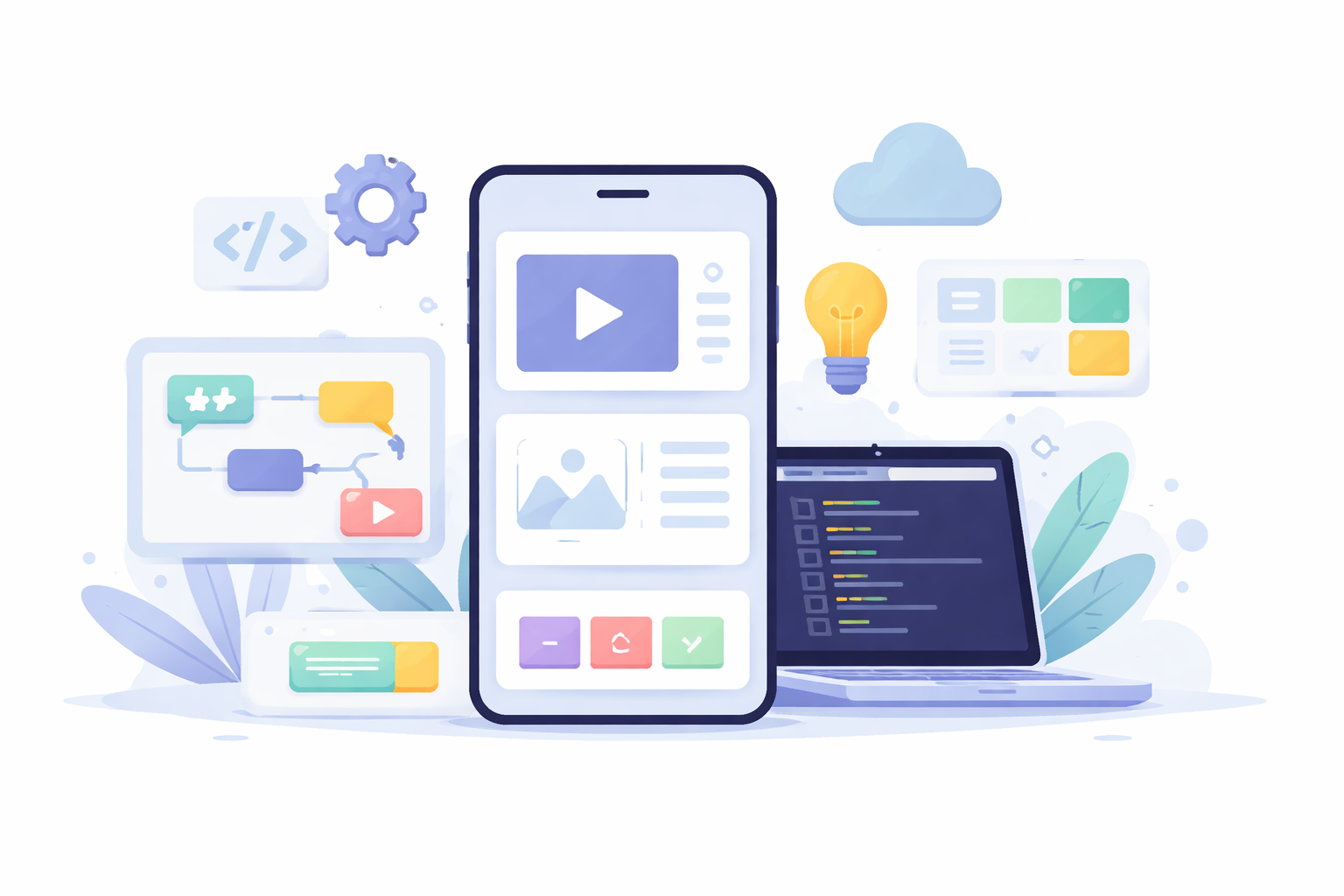
Before diving into specific platforms, it’s important to understand what app development platforms—often grouped with app creation software and mobile app platforms—offer. These platforms provide the tools (including app development tools and mobile development tools), frameworks, and environments necessary for building, designing, and deploying mobile applications. They cater to various needs, from simple app design tools to comprehensive software development platforms that offer end-to-end service from design to launch. Additionally, these platforms often include features for testing and debugging, ensuring that your app not only looks good but also performs reliably across different devices.
Understanding App Development Platforms
What Are App Development Platforms?
App development platforms are software solutions designed to assist developers in creating applications. They range from no-code solutions that require little to no coding expertise to low-code platforms that facilitate faster development with some level of programming required. Specialized development tools target specific phases of the app development process, enhancing the overall workflow.
Categories of App Development Platforms
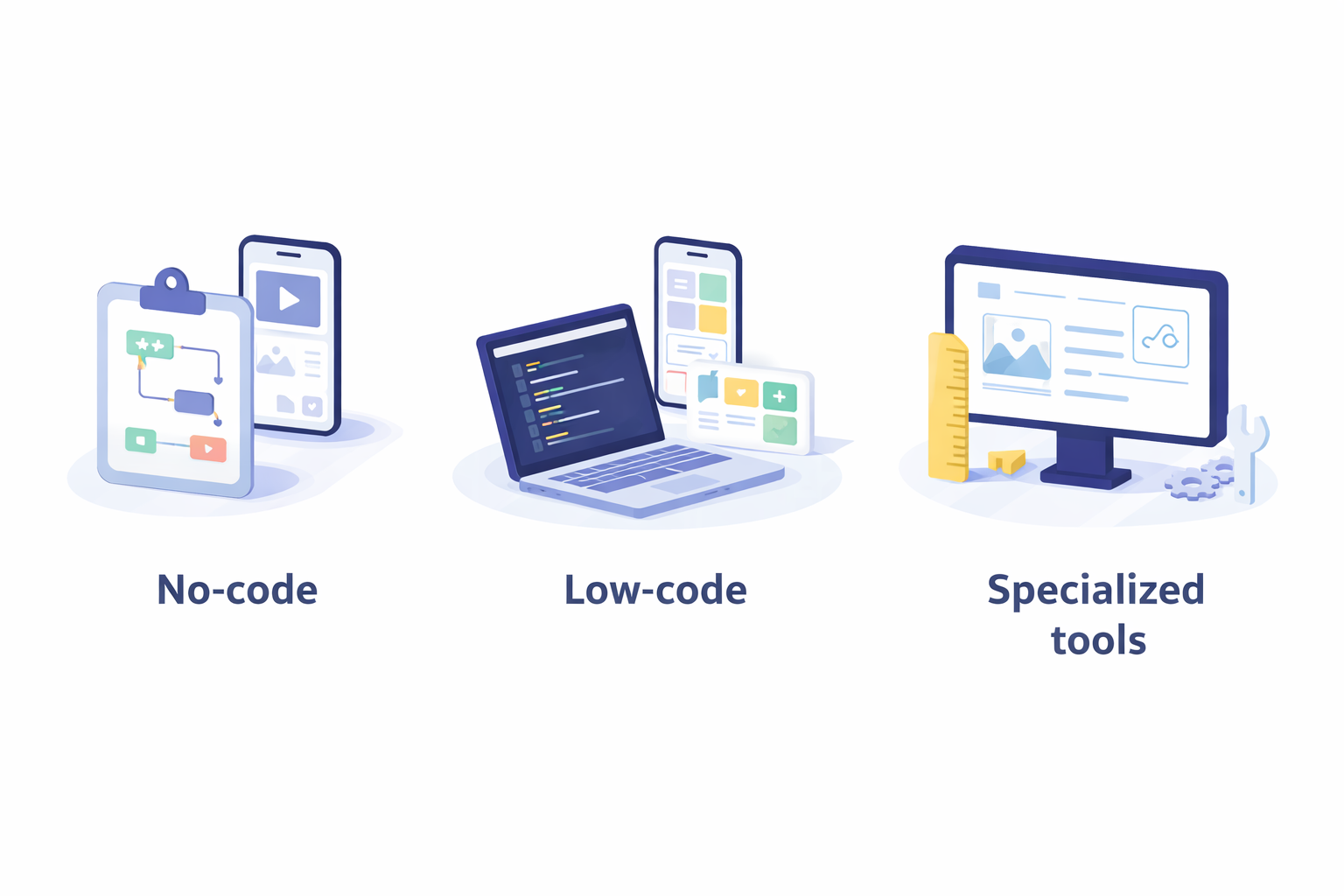
App development platforms can be broadly categorized into three types: no-code, low-code, and specialized development tools. No-code platforms (sometimes called “no-code app development platforms” or “no-code mobile app development platforms”) are perfect for those with limited technical skills, offering intuitive interfaces that enable anyone to create functional apps. Low-code platforms, while also user-friendly, provide more customization options for those with some coding knowledge. Specialized tools focus on specific aspects of app development, such as design or testing, and are often used in conjunction with other platforms to enhance the development process.
No-Code Platforms
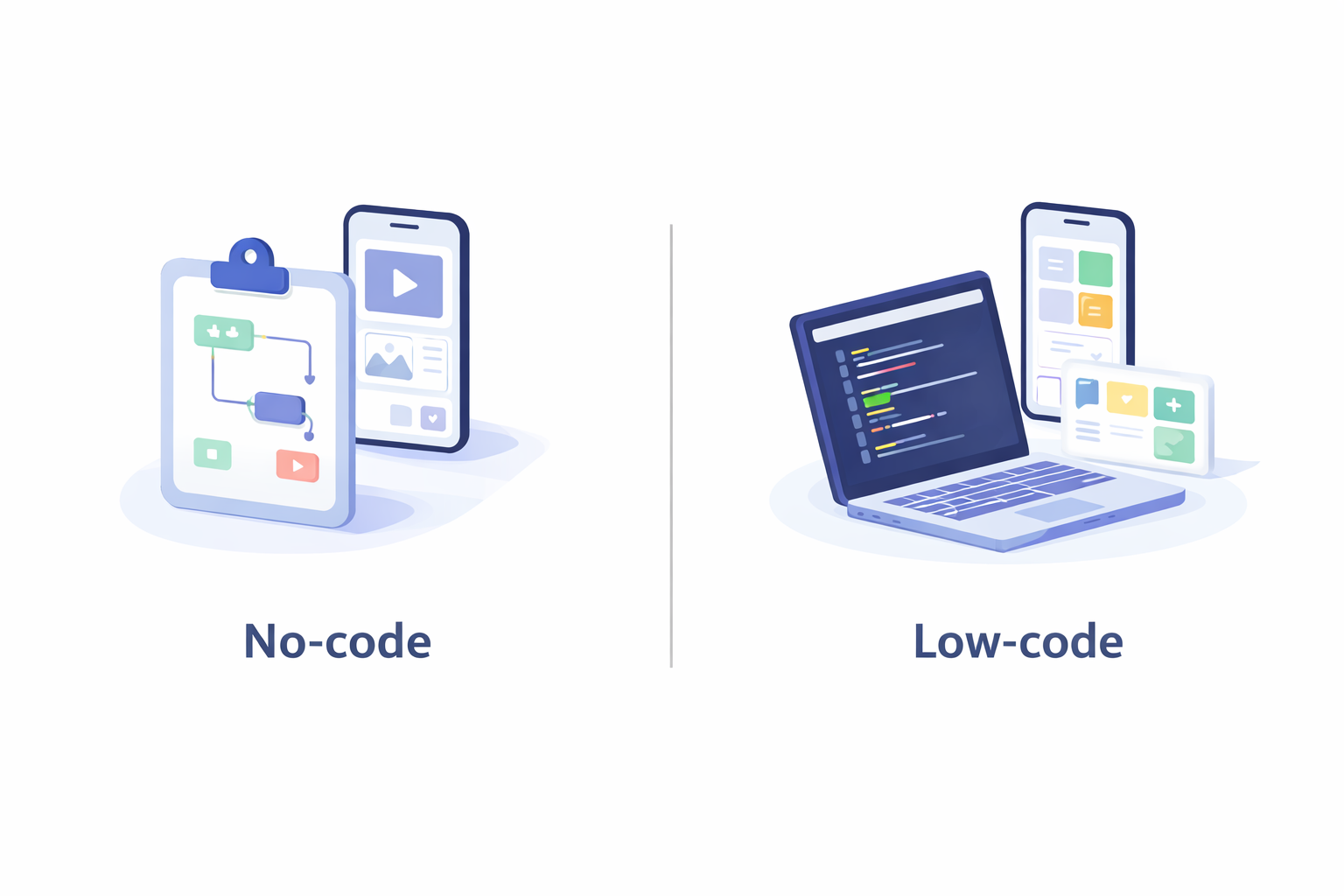
No-code platforms are designed for individuals who lack programming skills but still want to develop mobile apps. These platforms use visual interfaces and drag-and-drop features, allowing users to create functional apps without writing a single line of code. This democratization of app development empowers entrepreneurs, small business owners, and creative thinkers to bring their ideas to life without the barrier of technical expertise.
Low-Code Platforms
Low-code platforms speed up the development process for those with some coding knowledge. They provide pre-built components and templates, reducing the need for extensive coding. These platforms are ideal for enterprise app development, offering the flexibility to customize applications while maintaining a rapid development cycle. By streamlining the coding process, low-code platforms allow developers to focus on innovation and functionality, accelerating time-to-market for new apps.
Specialized Development Tools
Apart from no-code and low-code platforms, there are specialized tools designed to cater to specific app development needs. These tools focus on certain aspects of app creation, such as design, testing, or deployment. By using these tools alongside other development platforms, developers can enhance their workflow and improve the overall quality of their applications.
Top No-Code Platforms for Easy App Creation
nandbox: AI-Powered No-Code App Builder
nandbox is a no-code platform that transforms your app idea into fully functional native iOS and Android apps using AI-assisted tools. With simple chat-based commands, drag-and-drop design, pre-built templates, and API integrations, creators can quickly build and deploy apps without writing code. nandbox enables rapid prototyping, seamless testing, and scalable app development, making it an excellent choice for entrepreneurs, small businesses, and teams looking to move from concept to launch efficiently.
Bubble: A Leader in No-Code Development
Bubble is a popular no-code platform that allows users to build web applications with ease. It offers a visual editor and a robust set of tools for designing and launching apps. Bubble’s community and resources make it an excellent choice for beginners looking to bring their app ideas to life.
Appgyver: High-Performance Cross-Platform Apps
Appgyver is another no-code platform that focuses on delivering high-performance applications. It is particularly well-suited for creating cross-platform apps, allowing you to develop for both iOS and Android simultaneously. Appgyver’s Composer Pro tool provides a visual development environment that simplifies the app creation process.
Exploring Low-Code Platforms for Rapid Development
Mendix: Ideal for Enterprise App Development
Mendix excels in enterprise app development, offering a wide range of templates and modules that can be customized to meet specific business needs. Its collaborative development environment allows teams to work together seamlessly, streamlining the app development process.
OutSystems: Comprehensive End-to-End Solutions
OutSystems is known for its comprehensive end-to-end service. It offers everything from app design to deployment, making it one of the best mobile app development platforms available. Its advanced automation features and AI-powered tools enhance productivity, allowing developers to focus on delivering high-quality apps efficiently.
Specialized Tools for App Design and Development
Sketch: Designing Stunning User Interfaces
Sketch is a widely used app design tool that helps developers create stunning user interfaces. It offers a range of features for designing responsive layouts, making it a favorite among designers and developers alike.
Xamarin: Building Native Apps with C#
Xamarin is a development framework that allows developers to build native apps for iOS, Android, and Windows using a single codebase. It is an excellent choice for those who want to create high-performance apps with a native look and feel.
Flutter: Google’s UI Toolkit for All Platforms
Flutter is Google’s UI toolkit for building natively compiled applications for mobile, web, and desktop from a single codebase. Its popularity has surged due to its ability to create visually appealing apps with smooth animations.
Factors to Consider When Choosing an App Development Platform
Assessing Your Technical Skills
If you lack coding skills, a no-code platform like Bubble or Appgyver might be more suitable. For those with some programming knowledge, low-code platforms like Mendix or OutSystems can offer more flexibility.
Understanding Project Complexity
For simple apps, no-code platforms are often sufficient. However, for complex enterprise applications, low-code platforms provide the necessary tools and integrations.
Importance of Platform Compatibility
Ensure that the platform you choose supports the operating systems and devices you intend to target. Compatibility is crucial for reaching your intended audience and providing a seamless user experience.
Budgeting for App Development
Consider the cost of the platform, including any subscription fees or additional costs for premium features. Balancing your budget with your project requirements will help you make a cost-effective decision.
Conclusion: Bringing Your App Idea to Life
Turning an app idea into a real product is now more accessible than ever, thanks to the variety of app development platforms available. Whether you opt for no-code, low-code, or specialized development tools, the right platform can help you bring your vision to life efficiently and effectively. By evaluating your needs and understanding the capabilities of each platform, you can make an informed decision that aligns with your goals. Embrace the opportunity to innovate and create, and embark on your app development journey with confidence.