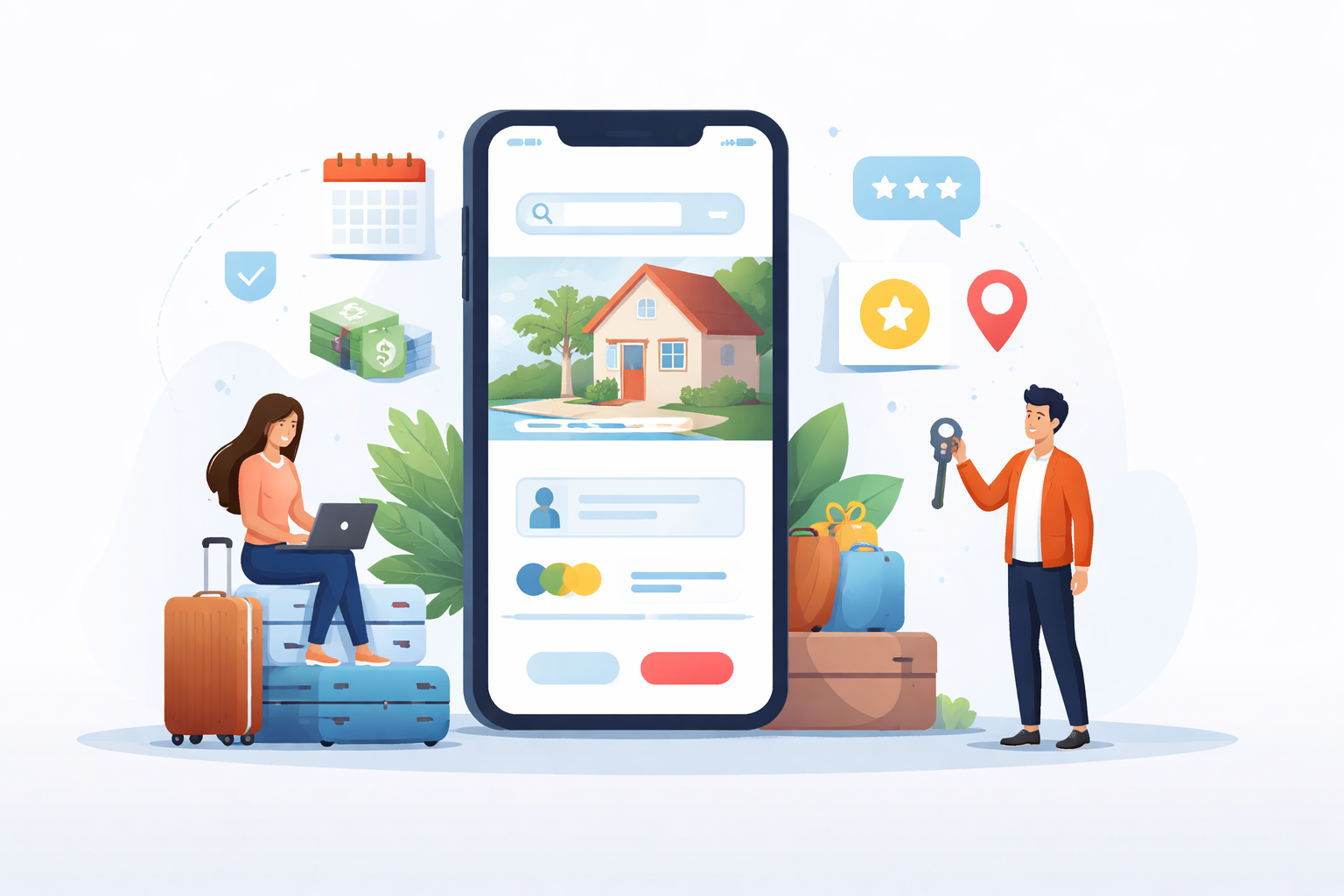
Before diving into development, it’s important to understand the core components that make Airbnb successful. If you’re considering Airbnb-Like App Development, start by clarifying how an Airbnb-like platform connects hosts who have a property to rent with travelers seeking accommodations. It provides a seamless interface for listing properties, booking stays, processing payments, and managing reviews. Your app should aim to offer a similar level of convenience and security for both hosts and guests.
The success of Airbnb can be attributed to its robust features that cater to both hosts and guests. Hosts can easily list their properties with detailed descriptions, photos, and pricing, while guests enjoy a smooth booking process. The app’s user-friendly design ensures that users can navigate through listings and make bookings with ease.
Trust and safety are paramount in a platform like Airbnb, where strangers interact. Airbnb’s review and rating system builds trust by allowing users to share their experiences. Implementing a similar system in your app can promote community and reliability, encouraging more users to join and participate.
Airbnb’s integrated payment system simplifies transactions between hosts and guests. The app manages currency conversions and ensures secure transactions, which is vital for user confidence. Your app should incorporate a reliable payment gateway to handle financial transactions efficiently and securely.
Summary
Building an Airbnb-like app means creating a secure, two-sided marketplace with excellent user experience, strong trust and safety mechanisms, and integrated global payments. Think of it as a peer-to-peer rental app that supports clear discovery, booking, and reviews. Start with thorough market research to define your target segments, niche, and USP, supported by a clear business plan. Design an accessible, consistent UI and deliver core features (profiles, listings, search/filters, booking, payments, and reviews) on a scalable, secure backend with responsive, high-performance frontend and well-documented APIs. For those exploring Airbnb-like app development, apply focused app development tips throughout. Rigorously test (manual, automated, security, beta/UAT), launch with a focused marketing/PR strategy, and sustain growth through ongoing support, iterative updates, and community engagement.
First Step to Develop an Airbnb-like App: Market Research.

Identify your target audience and understand their needs and preferences. Research existing competitors in the rental marketplace app space to identify gaps and opportunities. This will help you define your unique selling proposition (USP) and refine your business model.
Understanding current market trends is crucial for positioning your app effectively.
Examine how the sharing economy is evolving and identify emerging user preferences in travel app development. This will help you tailor your app’s features to meet the current demands of your target audience.
Segmenting your target audience is essential for creating a focused marketing strategy.
Determine the demographics, interests, and behaviors of potential users. By understanding their specific needs, you can design an app that resonates with them and addresses their pain points.
Conduct a comprehensive analysis of your competitors to understand their strengths and weaknesses.
Identify the gaps in their offerings and find opportunities for differentiation. This analysis will inform your app’s features and help you carve out a niche in the market.
While Airbnb covers a broad range of property types and locations, you might consider focusing on a specific niche to differentiate your app.
This could be luxury rentals, pet-friendly accommodations, eco-friendly stays, or a vacation rental app aimed at a particular region or theme. Defining a niche can help you attract a dedicated user base and compete more effectively.
A well-structured business plan is the foundation of a successful app.
Outline your business model, revenue streams, and marketing strategies. A clear plan will guide your development process and help you secure funding or partnerships if needed.
Design is a Critical Component of Any Successful App.
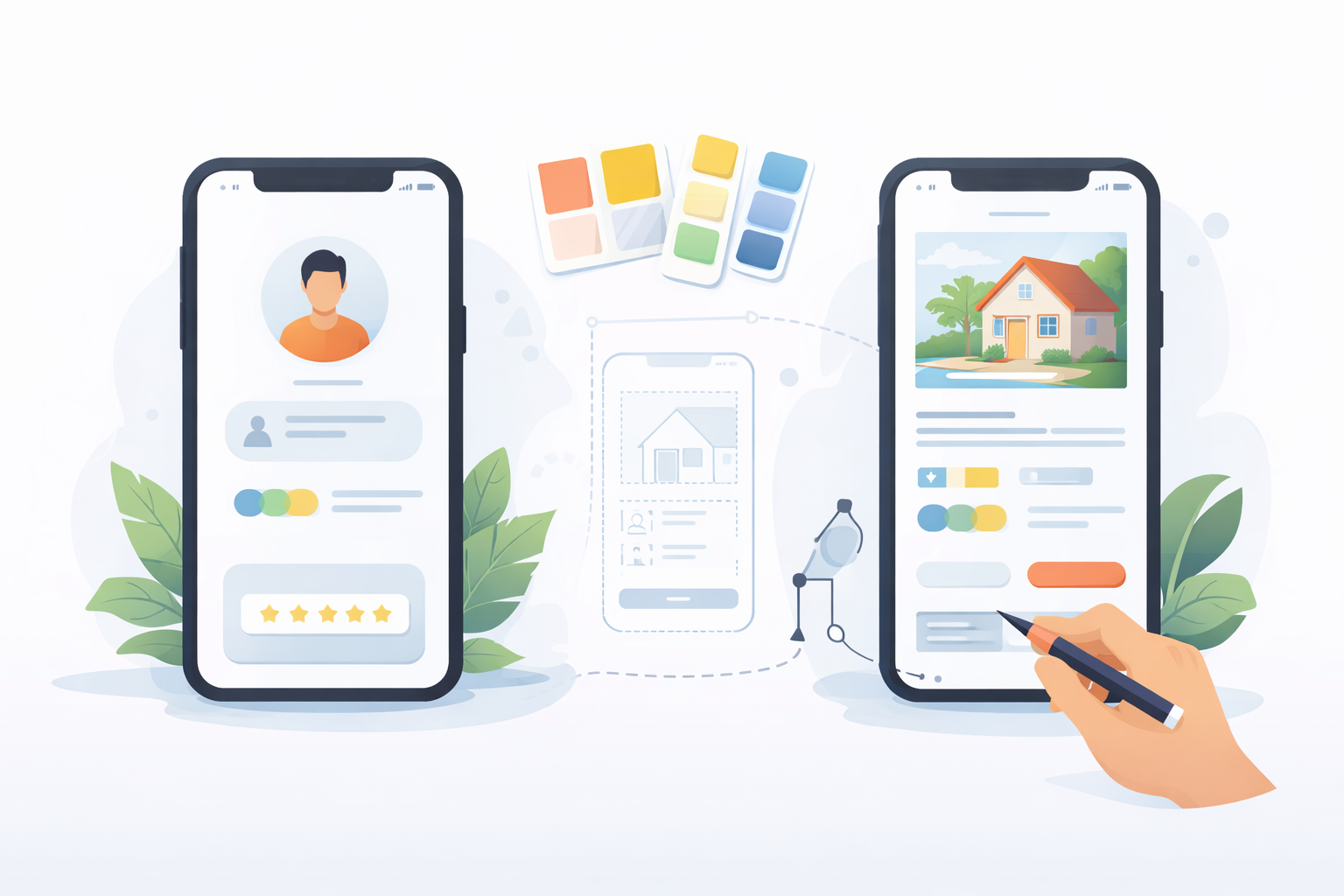
Your app’s design should be intuitive, visually appealing, and user-friendly. Follow hospitality app design best practices to create a seamless user experience that makes it easy for users to navigate the app, list properties, and book stays.
Adopt user-centric design principles to ensure your app meets the needs of its users.
Conduct usability testing to gather feedback and make iterative improvements. A user-friendly design will enhance engagement and encourage repeat usage.
Maintain visual consistency across your app to create a cohesive experience.
Use a consistent color scheme, typography, and iconography to reinforce your brand identity. Consistency in design elements helps users navigate the app with ease and builds brand recognition.
Ensure your app is accessible to all users, including those with disabilities.
Implement features like screen readers, adjustable text sizes, and voice navigation. Prioritizing accessibility not only broadens your user base but also demonstrates inclusivity and social responsibility.
- User Profiles: Allow users to create profiles that include personal information, preferences, and reviews.
- Property Listings: Enable hosts to list their properties with detailed descriptions, photos, and pricing information.
- Search and Filters: Implement robust search functionality with filters for location, price, amenities, and more.
- Booking System: Develop a secure booking system that handles availability, reservations, and cancellations.
- Payment Gateway: Integrate a reliable payment gateway to facilitate transactions between guests and hosts.
- Review System: Include a review and rating system to build trust and credibility among users.
The Backend of Your App is the Engine that Powers its Functionality.
It’s responsible for managing data, processing requests, and ensuring smooth operation. You’ll need to choose the right technology stack for your app, which may include programming languages, frameworks, and databases.
Select a technology stack that aligns with your app’s requirements and scalability goals.
Consider factors such as performance, security, and ease of maintenance. Popular choices for backend development include Node.js, Python, and Ruby on Rails.
Efficient database management is crucial for handling user data and transactions.
Choose a database that supports scalability and provides rapid retrieval times. SQL databases like MySQL or NoSQL options like MongoDB are popular choices depending on your app’s needs.
Ensure your backend is scalable to handle increasing numbers of users and transactions as your app grows.
Security is also paramount, particularly when dealing with user data and financial transactions. Implement robust security measures to protect your app and its users.
Develop APIs to enable seamless communication between your app’s frontend and backend.
Well-documented APIs facilitate integration with third-party services and allow for future expansion. Consider RESTful or GraphQL APIs based on your app’s requirements.
The Frontend is the Part of the App that Users Interact With.
It should be responsive, quick, and compatible with various devices and screen sizes. Choose a frontend technology stack that aligns with your design and user experience goals.
Ensure your app’s frontend is responsive to provide a consistent experience across devices.
Use flexible layouts and media queries to adapt to different screen sizes. Responsive design enhances user satisfaction and reduces bounce rates.
Optimize your frontend for quick loading times and smooth interactions.
Implement techniques like lazy loading, code splitting, and image optimization. A performant frontend improves user engagement and reduces abandonment rates.
Test your app on various browsers to ensure compatibility and consistent functionality.
Address any discrepancies to provide a uniform experience for all users. Cross-browser compatibility is essential for maximizing your app’s reach.
Craft a visually appealing and intuitive UI that guides users through the app.
Use clear call-to-action buttons, informative icons, and engaging animations. A well-designed UI enhances user interaction and encourages exploration.
Testing to Identify and Fix Any Bugs or Issues.
Testing should cover all aspects of the app, including functionality, usability, performance, and security. Consider using both manual and automated testing methods to ensure comprehensive coverage.
Conduct manual testing to evaluate the app’s functionality and user experience.
Test different user scenarios to identify potential issues. Manual testing provides insights into the app’s usability and helps refine its design.
Implement automated testing to streamline the testing process and improve efficiency.
Use testing frameworks to create test scripts for repetitive tasks. Automated testing ensures consistent test coverage and reduces human error.
Perform security testing to identify vulnerabilities and protect user data.
Conduct penetration testing to simulate attacks and evaluate your app’s defenses. Prioritizing security testing helps maintain user trust and compliance with regulations.
Conduct a beta test with a small group of users to gather feedback and identify any remaining issues.
Use this feedback to make improvements and refine the app before the official launch.
Engage real users in UAT to validate the app’s functionality and user experience.
Collect feedback on usability and identify areas for enhancement. UAT ensures the app meets user expectations before the official launch.
Once Your App is Ready, It’s Time to Launch it to the Public.
Choose a launch strategy that aligns with your target audience and marketing goals. This could involve a soft launch in a specific region or a full-scale launch across multiple markets.
Consider starting with a soft launch to test your app in a smaller market.
This approach allows you to gather feedback and make improvements before a wider release. A full launch can follow once you’re confident in your app’s performance and appeal.
Develop a launch strategy that outlines your marketing and promotional efforts.
Identify key channels for reaching your target audience and plan your messaging. A well-executed launch strategy ensures a strong market entry and builds initial momentum.
Develop a marketing plan to promote your app and attract users.
Use a mix of digital marketing strategies, such as social media, content marketing, and influencer partnerships, to reach your audience. Consider offering promotions or discounts to encourage early adopters.
Leverage PR efforts to generate buzz and media coverage for your app.
Reach out to tech bloggers, journalists, and industry influencers to share your app’s story. Positive PR can enhance your app’s credibility and attract a wider audience.
Launching Your App is Just the Beginning.
You’ll need to provide ongoing support to address user inquiries and resolve any technical issues. Regularly update the app to fix bugs, introduce new features, and improve performance based on user feedback.
Establish a responsive customer support system to address user inquiries and issues promptly.
Provide multiple channels for support, such as email, chat, and phone. Effective customer support enhances user satisfaction and loyalty.
Continuously update your app to introduce new features and improvements.
Use user feedback and market trends to guide your updates. Regular enhancements keep your app competitive and relevant to users.
Continuously gather feedback from users to understand their needs and preferences.
Use this feedback to guide future updates and ensure your app remains competitive in the market.
Build a community among your app’s users through engagement initiatives.
Create forums, social media groups, or events to encourage interaction and feedback. Community engagement builds loyalty and gives useful insights for app development.
Developing an app like Airbnb requires careful planning, design, and execution. By following these steps and focusing on delivering a superior user experience, you can create a successful property rental app that stands out in the market. Rather than building a literal Airbnb app clone, focus on differentiated value while staying inspired by proven patterns in an Airbnb-like platform. Remember to stay agile and responsive to user feedback, and you’ll be well on your way to building a thriving rental marketplace app.
Developing an Airbnb-like App with No-Code Platforms
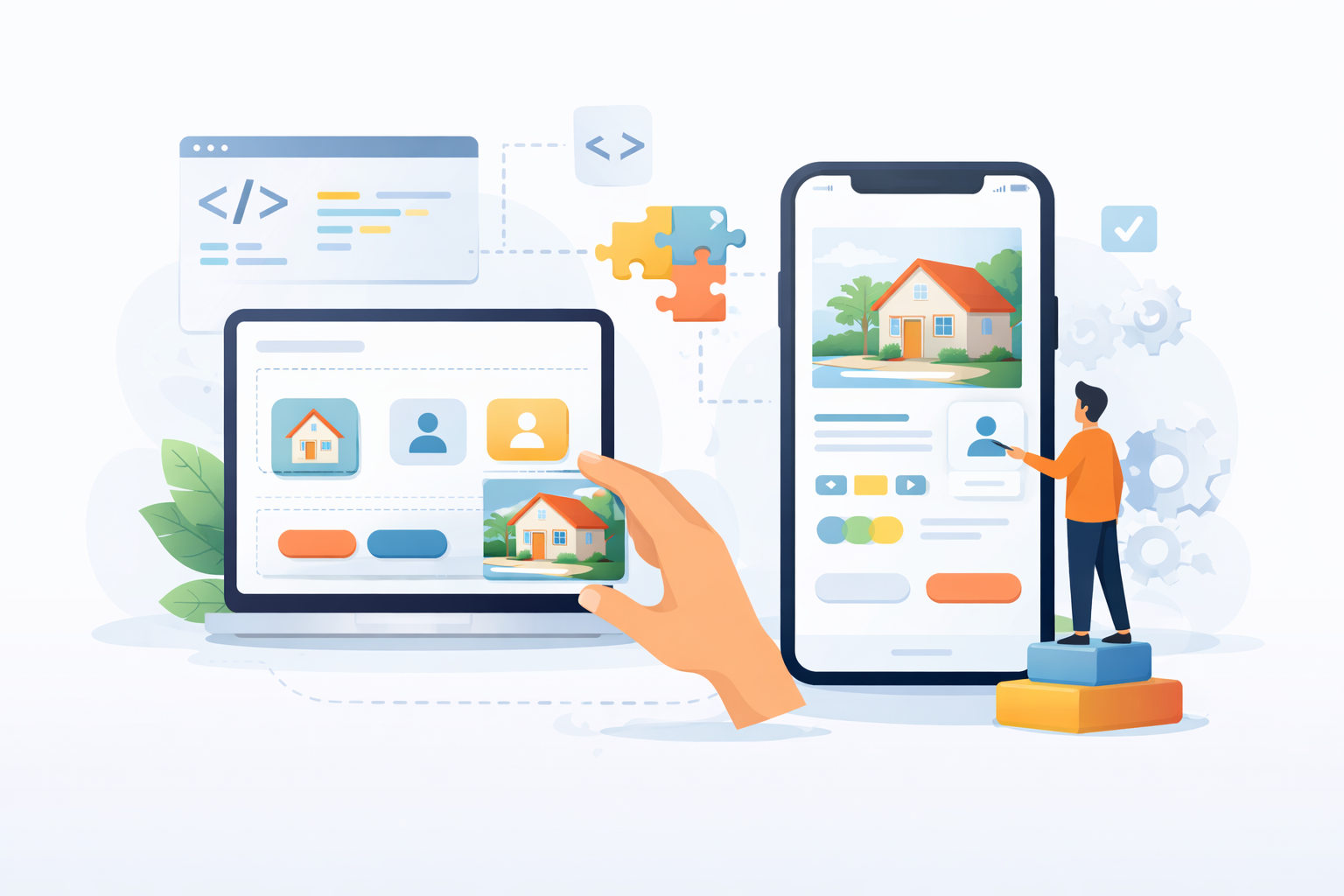
In the rapidly evolving world of app development, no-code platforms have emerged as a game-changer for aspiring entrepreneurs and businesses looking to create powerful applications without needing extensive programming knowledge. No-code app development allows individuals to build applications using visual interfaces and pre-built components, significantly reducing the complexity and time required to bring ideas to life.
Advantages of No-Code Development
No-code development offers numerous advantages, making it an attractive option for those exploring app development options:
- Speed: With no-code platforms, developers can quickly prototype and launch applications, accelerating the overall development timeline. This speed to market is particularly beneficial for entrepreneurs eager to capitalize on trends in the rental and hospitality industries.
- Lower Cost: Building an app traditionally often requires hiring a team of developers, which can be costly. No-code platforms eliminate the need for extensive technical resources, significantly reducing overall development costs.
- Accessibility: No-code platforms empower non-technical founders, allowing anyone with a great idea to bring their vision to life. Even those without a coding background can create powerful applications, making it easier for a diverse range of entrepreneurs to enter the rental marketplace.
An example of no-code app builders is nandbox no-code app builder. This platform allows you to create Airbnb-style rental apps without coding. Using pre-made templates, you can quickly set up listings, profiles, bookings, and payments, making it an efficient way to test and launch a rental marketplace app without coding.
Core Features of a No-Code Airbnb-like App
When building an Airbnb-like app using a no-code platform, certain core features are essential to replicate the seamless experience that users expect from a rental marketplace. These features include:
- User Profiles: Allowing both hosts and guests to create personalized profiles that include essential information, preferences, and reviews enhances trust and interaction within the app.
- Property Listings: Hosts need the capability to list their properties with detailed descriptions, images, and availability, ensuring guests can make informed decisions.
- Search and Filters: Robust search functionality with customizable filters (such as location, price, and amenities) enables users to quickly find accommodations that meet their needs.
- Booking System: A secure booking system is crucial for handling reservations, availability, and cancellations, providing a smooth experience for users.
- Payment Integration: Implementing a reliable payment gateway is essential for facilitating secure transactions between hosts and guests.
- Reviews and Ratings: Building a review and rating system fosters trust and encourages quality interactions within the platform.
Benefits of No-Code Platforms
Utilizing no-code platforms not only simplifies the app development process but also offers multiple benefits:
- Reduced Development Time: No-code platforms enable rapid development cycles, allowing entrepreneurs to test their ideas in the market faster than ever.
- Easier Updates: Making changes or improvements to your app is far less complicated without coding, ensuring your app can adapt quickly based on user feedback or emerging trends.
- Built-in Security and Compliance: Many no-code platforms come with built-in security features and compliance standards, ensuring that your app remains secure and trustworthy.
- Launch a Minimum Viable Product (MVP) Quickly: No-code development allows you to create and launch an MVP efficiently. This approach lets you validate your concept quickly and iteratively improve the app based on real user data.
In conclusion, developing an Airbnb-like app using a no-code platform is not only feasible but can also be a highly effective strategy for entrepreneurs looking to enter the rental marketplace. With the advantages of speed, cost efficiency, and accessibility, no-code platforms make it easy to build an Airbnb-like app without coding.
Frequently Asked Questions
What are the must-have features for the MVP of an Airbnb-like app?
Focus on the core marketplace loop and trust enablers typical of a peer-to-peer rental app:
- User Profiles: Let hosts and guests create profiles with personal info, preferences, and visible reviews to establish identity and history.
- Property Listings: Enable hosts to add detailed descriptions, photos, pricing, and availability so guests can evaluate options.
- Search and Filters: Provide robust search with filters (location, price, amenities, etc.) to help guests quickly find relevant stays.
- Booking System: Handle availability, reservations, and cancellations securely and predictably.
- Payment Gateway: Integrate a reliable gateway for secure, efficient transactions and, ideally, support for multiple currencies.
- Review and Rating System: Capture post-stay feedback to build trust, improve quality, and guide user decisions. These features deliver a usable, trustworthy two-sided marketplace while keeping scope manageable for a first release.
Should I target a niche or try to serve everyone from the start for an Airbnb-like app?
Starting with a focused niche is often advantageous. While Airbnb is broad, a niche—such as luxury rentals, pet-friendly stays, or eco-friendly accommodations—helps you:
- Differentiate against incumbents by addressing clear gaps.
- Tailor UX, filters, and messaging to a specific audience’s pain points.
- Concentrate marketing spend and community-building for faster traction. You can expand later once you’ve validated demand, refined your USP, and built operational strength in your initial segment.
How do I build trust and safety into an Airbnb-like app from day one?
Combine transparent social proof with secure operations:
- Implement a review and rating system so both hosts and guests can share experiences and set expectations.
- Use integrated, secure payments to minimize off-platform risk and protect financial data.
- Prioritize security in development and testing (including dedicated security testing and penetration testing) to safeguard user and transaction data.
- Provide responsive customer support and clear policies to resolve issues quickly and reinforce reliability. Consistent community feedback loops and visible accountability are key to sustained trust.
How should I choose the backend, database, and API approach for an Airbnb-like app?
Select technologies that align with performance, scalability, security, and maintainability goals:
- Backend: Common choices include Node.js, Python, or Ruby on Rails—pick based on team expertise and ecosystem fit.
- Database: Use a scalable option with fast retrieval—SQL (e.g., MySQL) or NoSQL (e.g., MongoDB) depending on your data patterns and flexibility needs.
- Architecture & Ops: Design for horizontal scalability and strong security practices from the outset, given growth and sensitive data.
- APIs: Provide well-documented RESTful or GraphQL APIs to connect frontend and backend and enable third-party integrations later. A thoughtfully chosen stack reduces rework and supports long-term growth.
What does a practical testing-to-launch plan look like for an Airbnb-like app?
Short answer: Move from internal validation to real-world proof in stages:
- Functional and UX checks: Start with manual testing across core flows to refine usability.
- Automated testing: Add repeatable test coverage for critical paths to catch regressions efficiently.
- Security testing: Run vulnerability assessments and penetration tests to harden data and payments.
- Beta testing: Release to a small user group to surface real-world issues and gather actionable feedback.
- UAT (User Acceptance Testing): Validate that the app meets user expectations before public release.
- Launch strategy: Begin with a soft launch in a limited market to iterate quickly, then scale to a full launch supported by a clear marketing plan and PR outreach. This sequence minimizes risk, improves quality, and sets up a stronger public debut.
For readers pursuing app development like Airbnb, keep these app development tips in mind as you balance speed, quality, and differentiation.