In the ever-evolving world of technology, mobile app development has become essential for businesses aiming to thrive in today’s digital landscape. Recent innovations have introduced AI-powered no-code platforms, enabling more accessible app creation for non-developers. This shifts the landscape from traditional development agencies to AI-native app builders, which streamline the development process and reduce costs. Whether you are a startup or an established enterprise, these mobile app development solutions can enhance your brand’s presence and engagement effectively.
In this article, we’ll explore the essential aspects of mobile app development, from understanding the basics to selecting the right development partner.
Types of Mobile App Development Solutions
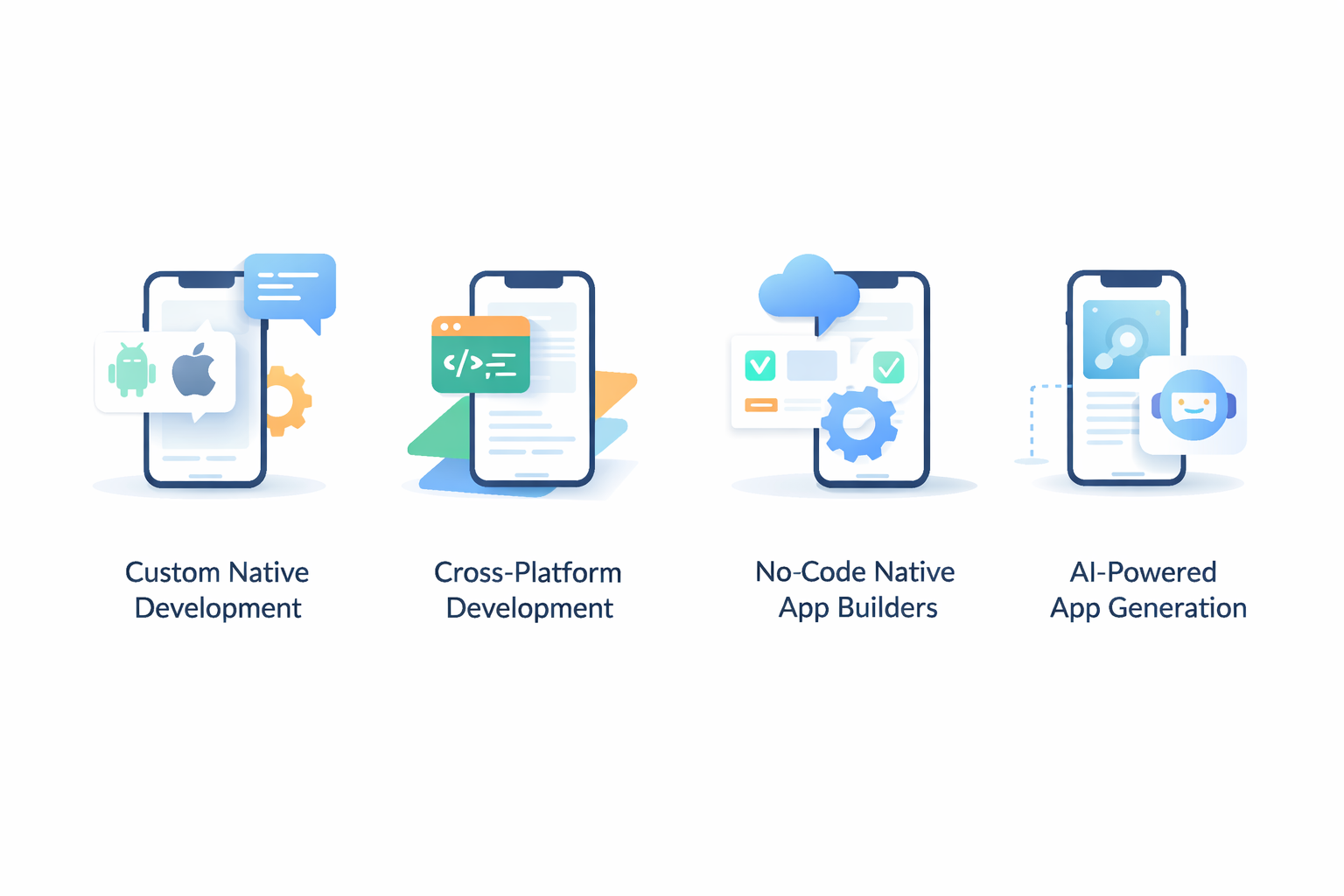
- Custom Native Development: Tailored app solutions built specifically for iOS or Android platforms, ensuring optimal performance and user experience.
- Cross-Platform Development: Applications developed using frameworks that allow for a single codebase to run on multiple platforms, reducing time and cost.
- No-Code Native App Builders: Tools enabling users to create applications without extensive programming knowledge, making app development more accessible.
- Enterprise Mobile App Platforms: Comprehensive solutions designed for large organizations, focusing on scalability, security, and integration with existing systems.
- AI-Powered App Generation: Automated app development using artificial intelligence, streamlining the process and enhancing functionality with minimal human intervention.
The Mobile App Development Lifecycle: Ideation
Mobile app development spans the full lifecycle from ideation to deployment, emphasizing strong UX/UI, robust front- and back-end engineering, and effective API integrations. Success hinges on choosing a capable development partner with proven expertise, transparent processes, realistic budgets/timelines, and reliable post-launch support. Key tools include Xcode, Android Studio, and React Native, while cloud, AI, and IoT expand capabilities amid trends like 5G, AR/VR, and blockchain. Enterprise apps deliver operational efficiency, better communication, and data-driven decision-making.
Mobile app development is the process of creating software applications that run on mobile devices. It involves several stages, from ideation and design to development and deployment. The primary goal is to deliver a seamless and functional user experience on various platforms such as iOS and Android.
The mobile app development lifecycle encompasses several critical stages.
- Ideation and Planning: This initial phase involves brainstorming and defining the app’s purpose and target audience. It’s crucial to conduct market research to understand user needs and identify competitors.
- Design and Prototyping: Once the concept is clear, the design phase begins. Wireframes and prototypes are created to visualize the app’s layout and functionality. This stage ensures that the app’s user interface (UI) and user experience (UX) are well thought out.
- Development and Testing: This phase involves coding the app and integrating necessary features. Rigorous testing is conducted to ensure the app functions correctly and is free from bugs. Testing includes usability, performance, and security checks.
Key Components of App Programming
App programming is the backbone of mobile app development. It involves writing code to create the app’s functionality. Here’s a look at some essential components:
- Front-end Development: This involves designing the user interface (UI) and ensuring the app is visually appealing and user-friendly. Tools like Swift for iOS and Kotlin for Android are commonly used. Front-end development also focuses on creating responsive designs that adapt to various screen sizes and resolutions.
- Back-end Development: This is where the app’s logic and functionality are implemented. It involves server-side scripting, database management, and integration with third-party services. A robust back-end ensures seamless data processing and communication between the app and the server.
- APIs (Application Programming Interfaces): APIs allow different software systems to communicate and share data. They are crucial for integrating various services and functionalities into your app. Well-designed APIs enable smooth interaction with external platforms, such as payment gateways and social media services.
Importance of App Design
App design plays a vital role in mobile app development. A well-designed app not only attracts users but also keeps them engaged. Key aspects include:
- User Experience (UX): Ensures the app is intuitive and easy to navigate. A good UX design focuses on understanding user behavior and creating a seamless flow that guides users through the app’s features.
- User Interface (UI): Focuses on the app’s visual elements like buttons, icons, and layout. An aesthetically pleasing UI can enhance user satisfaction and encourage repeated use.
- Responsive Design: Ensures the app functions well on different devices and screen sizes. Responsive design techniques allow the app to provide a consistent experience, whether accessed on a smartphone, tablet, or other mobile device.
Choosing the Right Mobile App Development Company
Selecting the right mobile app development company is crucial for the success of your project. Here are some factors to consider:
When choosing a development partner, assess their technical expertise.
- Proven Track Record: Look for a company with a proven track record in mobile app development.
- Technology Stack: Ensure the company is proficient with the technologies and platforms relevant to your project, such as iOS, Android, cross-platform solutions, or specific frameworks like React Native.
- Innovation and Adaptability: A good development company stays updated with the latest trends and can adapt to new technologies to deliver innovative solutions.
Review the company’s portfolio to see their previous work and read client testimonials to gauge their reliability and quality of service.
- Diverse Portfolio: A diverse portfolio indicates the company’s ability to handle various types of projects across different industries.
- Client Satisfaction: Client reviews can provide insights into the company’s communication skills, project management, and ability to meet deadlines.
- Case Studies: Look for detailed case studies that showcase the company’s problem-solving capabilities and the impact of their solutions on client businesses.
Understand their development process. A good company will have a structured approach that includes stages like planning, design, development, testing, and deployment.
- Agile Methodology: Agile development allows for flexibility and iterative progress, enabling teams to adapt to changes and continuously improve the app.
- Transparent Communication: Clear communication channels and regular updates are essential for keeping you informed about the project’s progress.
- Quality Assurance: A robust quality assurance process ensures that the app meets high standards of functionality, performance, and security.
Ensure that the company can deliver your project within your budget and timeline. Transparency in pricing and clear communication about deadlines are essential.
- Budget-Friendly Solutions: Look for a company that offers cost-effective solutions without compromising on quality.
- Realistic Timelines: A reliable company provides realistic timelines and adheres to them, ensuring timely delivery of your app.
- Post-Launch Support: Consider the availability of post-launch support and maintenance services to address any issues that may arise after deployment.
Popular Tools and Technologies
The mobile app development landscape is filled with various tools and technologies designed to streamline the process and enhance the app’s functionality.
Here are some popular tools used in app development:
- Xcode: The official IDE for iOS app development. It offers a comprehensive suite of tools for building, testing, and debugging iOS apps.
- Android Studio: The official IDE for Android app development. Android Studio provides a robust environment for developing Android apps, with features like code editing, debugging, and performance analysis.
- React Native: A framework for building native apps using JavaScript and React. React Native allows developers to create cross-platform apps with a single codebase, reducing development time and cost.
No-Code and AI-Powered Mobile App Development Solutions
In today’s fast-paced digital environment, businesses can now build mobile apps without any coding knowledge, thanks to the rise of no-code platforms. These platforms allow users to design and create applications through intuitive interfaces, enabling entrepreneurs and companies to bring their ideas to life quickly. Some no-code platforms generate web apps that can run in a browser, while others, like nandbox, focus on generating true native apps for iOS and Android, ensuring optimal performance and a seamless user experience.
Utilizing no-code and AI-powered solutions significantly reduces development time and costs, making it an attractive option for businesses of all sizes. Companies can achieve faster time-to-market by rapidly prototyping and iterating on their app ideas without the need for extensive coding. Furthermore, these solutions simplify maintenance tasks, as updates and changes can be implemented easily within the no-code environment.
By harnessing AI-powered app builders, organizations can streamline the development process, enhance functionality, and cater to user needs more effectively. This innovative approach not only democratizes app creation but also empowers businesses to focus on their core objectives while quickly adapting to market demands.
Mobile Software and Emerging Trends
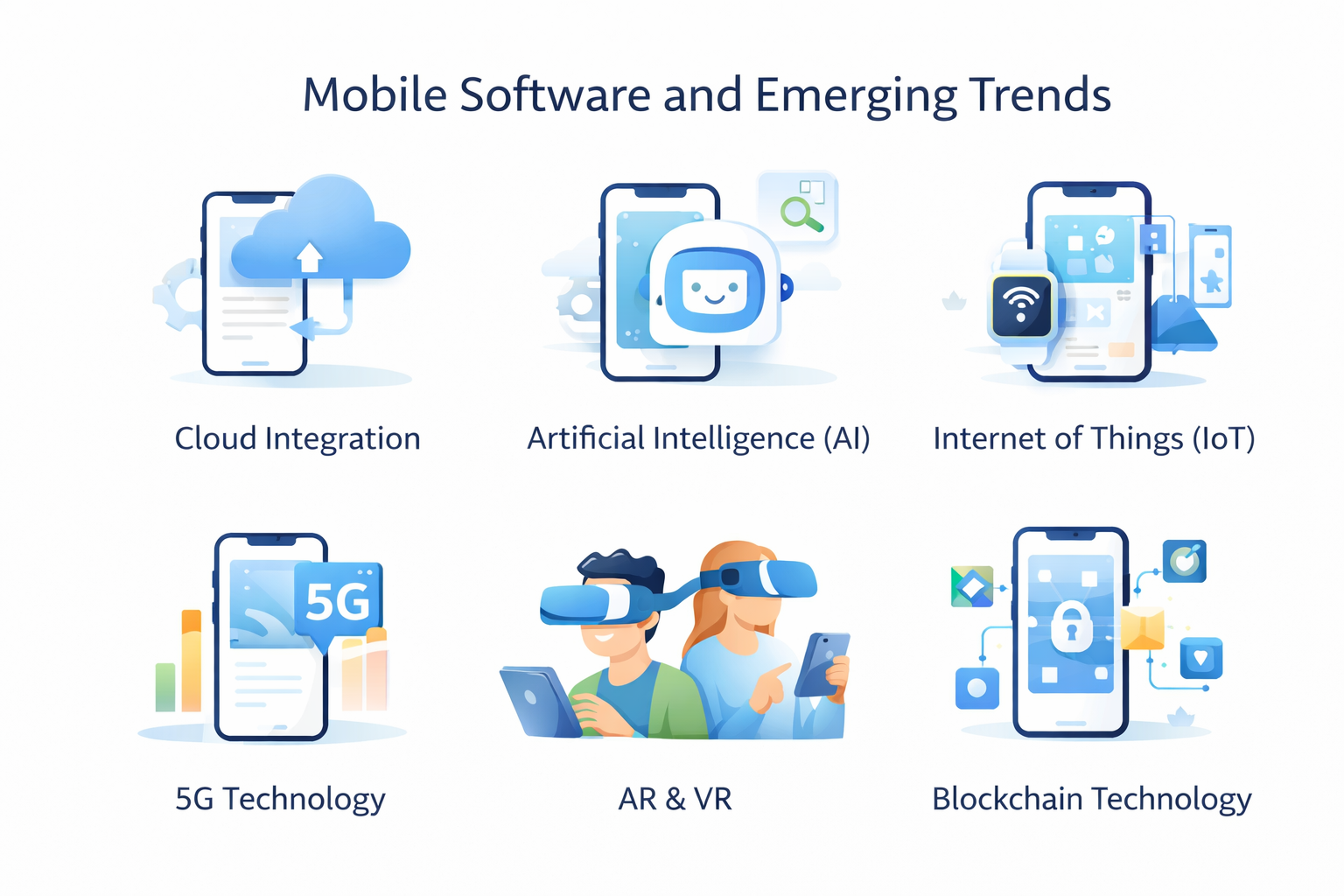
Mobile software refers to the various applications and systems used on mobile devices. Solutions like cloud integration, AI, and IoT are increasingly being integrated into mobile apps to enhance their capabilities.
- Cloud Integration: Cloud services enable seamless data storage and access, allowing apps to function efficiently with reduced dependency on device storage.
- Artificial Intelligence (AI): AI technologies enhance app functionalities by providing personalized user experiences and automating tasks.
- Internet of Things (IoT): IoT integration allows apps to connect with smart devices, offering advanced features like remote monitoring and control.
The world of mobile technology is continuously evolving. Here are some trends to watch:
- 5G Technology: Faster internet speeds and improved connectivity enable apps to deliver richer user experiences with enhanced multimedia content and real-time interactions.
- Augmented Reality (AR) and Virtual Reality (VR): Enhancing user experiences with immersive technologies, AR and VR are increasingly being used in gaming, education, and retail apps.
- Blockchain Technology: Blockchain is being explored for secure transactions and data management within mobile apps, particularly in finance and healthcare sectors.
Enterprise Mobile App Development
Enterprise mobile app development focuses on creating apps tailored for businesses to improve efficiency and productivity.
Enterprise apps offer numerous advantages for businesses looking to optimize their operations.
- Streamlined Operations: Apps can automate tasks and improve workflow efficiency, reducing manual efforts and minimizing errors.
- Enhanced Communication: Facilitates better communication and collaboration among employees, enabling seamless information exchange and project coordination.
- Data Management: Provides real-time access to data and insights for informed decision-making, allowing businesses to respond quickly to market changes and customer needs.
When selecting an enterprise mobile app development company, consider their experience with business-oriented apps and their ability to integrate complex systems and data.
- Industry Experience: Choose a company with experience in your industry to ensure they understand your specific business needs and challenges.
- Scalability: Ensure the company can develop scalable solutions that grow with your business and adapt to future demands.
- Security Standards: Verify the company’s adherence to security standards and protocols to protect sensitive business data and ensure compliance with industry regulations.
Enterprise-Grade Mobile App Platforms
Enterprise solutions require a robust architecture that addresses key factors such as security, scalability, and user management. These platforms must ensure data protection through stringent security protocols and compliance with industry regulations, especially when handling sensitive corporate information. Scalability is equally crucial, enabling the application to accommodate a growing number of users and expanding functionalities without compromising performance.
Native performance is critical in enterprise mobile applications, as it delivers optimal speed and responsiveness. Native apps leverage device-specific capabilities, leading to a seamless and intuitive user experience that enhances productivity and engagement among employees.
AI-driven automation serves as a significant differentiator for enterprise-grade mobile app platforms. By integrating artificial intelligence, organizations can automate repetitive tasks, optimize workflows, and provide personalized experiences for users. This not only increases operational efficiency but also enhances decision-making through real-time data insights. By investing in enterprise solutions that encompass these elements, businesses can ensure they have the tools to navigate today’s complex digital landscape effectively while driving growth and innovation.
Conclusion
Mobile app development is a dynamic field that offers immense opportunities for businesses to grow and innovate. By understanding the fundamentals of app programming, design, and development, you can create an app that not only meets your business objectives but also provides an exceptional user experience. Whether you’re looking to develop a simple app for customer engagement or a complex enterprise solution, choosing the right development partner is key to your success. With the right tools, technologies, and expertise, your mobile app can become a powerful asset in today’s competitive digital landscape.
Frequently Asked Questions
Can I build a mobile app without hiring developers?
Yes, you can build a mobile app without hiring developers by utilizing no-code app builders. These platforms offer intuitive interfaces that enable users to design and create apps without any coding knowledge. Some AI-powered native app builders, like nandbox, allow you to generate true native apps for iOS and Android effortlessly. This approach significantly reduces costs and speeds up the development process, making it accessible for businesses of all sizes to bring their app ideas to life quickly.
What is the difference between a no-code app builder and a traditional development agency?
A no-code app builder allows users to create applications without any coding skills, utilizing user-friendly interfaces and templates. In contrast, a traditional development agency typically requires skilled developers to build custom applications from scratch, often resulting in longer timelines and higher costs. AI-powered native app builders, like nandbox, streamline this process, offering the benefits of native performance without the complexities of traditional development, making app creation faster and more accessible.
What are the key stages of the mobile app development lifecycle?
The lifecycle typically includes ideation and planning, design and prototyping, development and testing, and deployment. In ideation, you define purpose, audience, and conduct market research. Design turns concepts into wireframes and prototypes to validate UX/UI. Development implements features for front end and back end, while testing covers usability, performance, and security to ensure quality before launch.
How do front-end, back-end, and APIs differ in app programming?
Front-end focuses on the user interface and experience—what users see and interact with—often using Swift (iOS) and Kotlin (Android). Back-end handles server-side logic, databases, and integrations that power app functionality behind the scenes. APIs connect the app to external services (e.g., payment gateways, social platforms), enabling secure data exchange and added capabilities.
How should I choose the right mobile app development company?
Look for a proven track record, a relevant technology stack (iOS, Android, cross-platform frameworks like React Native), and a culture of innovation. Review a diverse portfolio, client testimonials, and detailed case studies. Favor teams with a clear, Agile process, transparent communication, strong QA, realistic budgets and timelines, and reliable post-launch support. Be cautious of vague pricing, limited examples of past work, or unrealistic delivery promises.
Which tools and technologies are commonly used, and when does cross-platform development make sense?
Xcode is the official IDE for iOS, and Android Studio serves Android development; both provide robust build, test, and debugging tools. React Native enables cross-platform development with a single JavaScript/React codebase, helping reduce time and cost when targeting both iOS and Android. The best choice depends on your requirements, timelines, and need for shared code across platforms.
What trends and integrations can enhance my app, especially for enterprises?
Cloud integration improves data access and scalability; AI personalizes experiences and automates tasks; IoT connects apps to smart devices for monitoring and control. Emerging trends like 5G enable richer, real-time experiences; AR/VR adds immersive interactions; and blockchain supports secure transactions and data handling. For enterprise apps, these capabilities can streamline operations, enhance communication, and enable data-driven decision-making—just ensure your development partner has industry experience, builds for scalability, and adheres to strong security standards.