Creating a TikTok clone app from scratch is a fascinating journey into the world of social media apps and social media clone projects. With TikTok’s booming popularity, TikTok clone app development for a mobile video app or video-sharing app can be a lucrative venture. However, it’s not a simple task and requires careful planning, the right technology stack, and a dedicated team. This guide will walk you through the essential steps to create your own TikTok-like app, covering everything from initial planning to launch.
Summary
This guide outlines how to build a TikTok-like app: define core features (auth, profiles, video creation/editing, social interactions, recommendations, notifications), choose a suitable tech stack (e.g., React Native/Flutter, Node/Python, MongoDB/Firebase, cloud storage, AI/ML), design an intuitive UI, develop, rigorously test, and launch with a solid marketing plan. It highlights cost drivers—scope, team location, and timeline—with an estimated budget of $50,000 to $200,000+. Selecting an experienced development partner is key, and ongoing updates are essential to remain competitive. Because clone app development often centers on user-generated content, plan for moderation, storage, and safety from day one.
Before diving into development, it’s crucial to understand what makes TikTok so popular. TikTok is a short video platform and mobile video app that allows users to create and share videos with various effects. Key features include a user-friendly interface, a wide range of video editing tools, and a powerful recommendation algorithm.
- User Registration and Profile Management: Allow users to sign up using email or social media accounts and create personalized profiles.
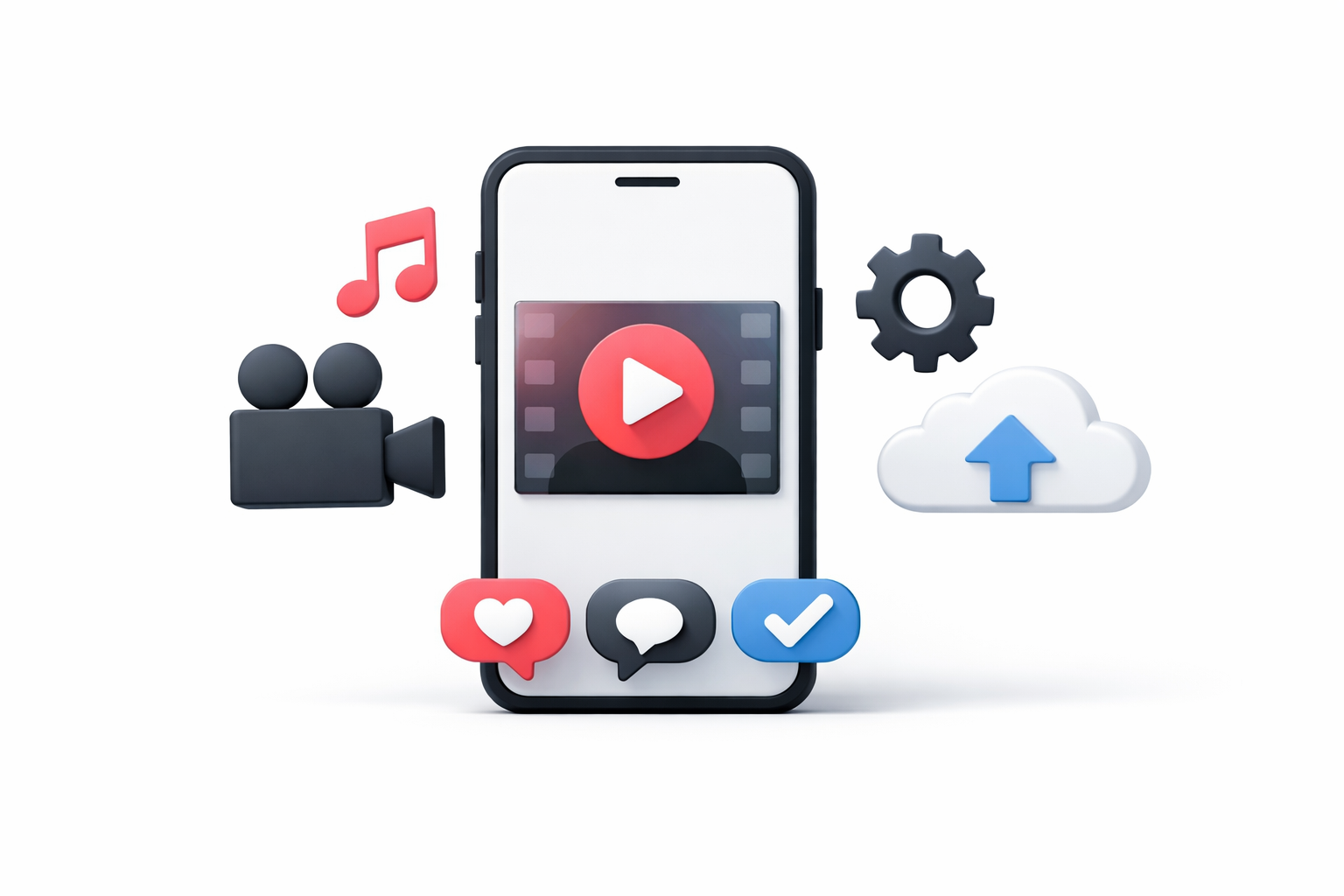
- Video Creation and Editing Tools: Provide users with tools to record, edit, and enhance videos with filters, music, and effects.
- Social Sharing and Interaction: Enable users to like, comment, and share videos to increase engagement across your video sharing app.
- Content Discovery and Recommendation: Implement an algorithm to suggest videos based on user preferences and behaviors.
- Push Notifications: Keep users engaged by sending notifications about new content, likes, and comments.
Steps to Develop a TikTok Clone App
1. Market Research and Planning

Begin by conducting thorough market research to understand your target audience and competition. Identify the unique value proposition of your app and outline the core features you want to offer. This step is crucial to ensure that your app stands out in the crowded market of social media clones and to shape your clone app development roadmap.
2. Choose the Right Technology Stack
Selecting the appropriate technology stack is vital for the development process. A typical TikTok clone app would require a combination of the following technologies:
- Frontend: Use languages like JavaScript, HTML, and CSS, along with frameworks such as React Native or Flutter for cross-platform compatibility.
- Backend: Utilize Node.js, Python, or Ruby on Rails to handle server-side operations.
- Database: Opt for databases like MongoDB or Firebase for storing user data and media files.
- Cloud Storage: Services like AWS S3 or Google Cloud Storage are ideal for storing user-generated content.
- AI/ML Integration: Implement AI algorithms for video recommendations and content moderation.
3. Design the User Interface
The user interface (UI) should be intuitive and visually appealing. Engage professional UI/UX designers to create wireframes and prototypes that ensure a seamless user experience. The app should be easy to navigate, with smooth transitions and minimal load times.
4. Develop the App
With your design in place, it’s time to start the development phase. This involves coding the frontend and backend components, integrating APIs, and ensuring the app functions as intended. It’s advisable to work with a professional TikTok clone app development company or hire experienced developers to expedite the process and maintain quality. Depending on scope, a TikTok clone app development service or a specialized TikTok clone app development firm can support architecture, integrations, and compliance.
5. Test the App
Testing is a critical phase where you identify and fix bugs, ensuring the app is stable and performs well under different conditions. Conduct both alpha and beta testing with real users to gather feedback and make necessary improvements. If you’re coordinating TikTok clone app development online with a distributed team, use remote testing suites and CI/CD to streamline feedback.
6. Launch and Market Your App
Once testing is complete, prepare for the app launch. Create a marketing strategy to reach your target audience, leveraging social media, influencer partnerships, and online promotions to generate buzz. Ensure your app is available on both the App Store and Google Play to maximize reach.
Cost of Developing a TikTok Clone App
The TikTok clone app development cost can vary significantly depending on several factors, including:
- Features and Complexity: More features and complex functionalities will increase development costs.
- Development Team Location: Hiring developers from different regions can affect costs. For example, developers in North America or Europe typically charge more than those in Asia or Eastern Europe.
- Timeframe: A shorter development timeline may increase costs due to the need for additional resources.
On average, the cost can range from $50,000 to $200,000 or more, depending on the app’s scope and the team you hire.
Choosing a TikTok Clone App Development Firm
Selecting the right development firm is crucial to the success of your project. Look for a company with experience in social media app development and a portfolio of similar projects. Evaluate their technical expertise, client reviews, and communication skills to ensure they can deliver on your vision. Ask whether they offer an end-to-end TikTok clone app development service, including post-launch optimization.
No-Code App Builders: A Smarter Approach to TikTok-Like Apps
For entrepreneurs or small teams, building a TikTok clone from scratch with traditional coding can be complex, time-consuming, and expensive. No-code app builders offer an alternative by letting you create functional social media apps without writing extensive code. Platforms like nandbox provide templates and pre-built modules for video sharing, user profiles, social interactions, and push notifications, enabling you to prototype and launch faster.
Using a no-code solution allows you to focus on user experience, content strategy, and community growth, while the platform handles backend, hosting, and scalability. This approach is particularly useful for testing your idea, validating features, or launching an MVP before investing in full-scale custom development.
No-Code solutions: A Smarter Option Compared to Traditional Development:
1. Reduced Development Costs
Traditional TikTok clone development can range from $50,000 to $200,000+, depending on complexity, team location, and features. In contrast, building an app with a no-code platform drastically reduces costs. Subscription plans typically include hosting, backend infrastructure, and app templates, so you pay mainly for the platform rather than custom development labor. For early-stage MVPs or pilot projects, no-code apps can cost a fraction of traditional development, making it ideal for testing your idea before committing to a large budget.
2. Faster Time-to-Market
Coding a full-featured social media app from scratch can take months or even over a year, especially when building video editing, recommendation algorithms, and real-time notifications. No-code platforms allow you to launch in weeks instead of months. Templates and pre-built features accelerate development, letting you focus on design, content, and user engagement rather than building everything from the ground up.
3. Scalability and Maintenance Made Easier
Scaling and maintaining a traditional app often requires dedicated backend engineers and ongoing server management. No-code platforms like nandbox handle backend infrastructure, cloud storage, and updates automatically, so your app can grow with your audience without constant technical intervention. This allows smaller teams to operate efficiently while maintaining performance and stability.
4. Focus on User Experience and Features
No-code development shifts your focus from complex coding to designing an engaging experience for users. You can iterate quickly, test new features, and respond to user feedback without rewriting core functionality. Features like push notifications, social sharing, and video uploads are built-in, so you can concentrate on community-building and content strategy, which are critical for TikTok-like apps.
5. Ideal for MVPs and Testing New Ideas
If your goal is to validate your concept before investing heavily, no-code platforms provide a safe, cost-effective environment. You can launch a minimum viable product, collect feedback, and refine features—all without committing to a large development budget or timeline. This approach helps reduce risk while keeping your app competitive.
Conclusion
Building a TikTok clone app from scratch is a challenging but rewarding endeavor for any video sharing app founder. By following the outlined steps—conducting thorough research, choosing the right technology stack, designing an intuitive UI, and partnering with a skilled development team—you can create a successful short video platform.
Remember that continuous updates and improvements are key to maintaining user engagement and staying competitive in the ever-evolving world of social media apps. With dedication and the right approach, your TikTok alternative app can thrive in this dynamic market.
Q&A
What core features should a TikTok-like app include?
At minimum, plan for user registration and profiles; robust video creation and editing (recording, filters, music, effects); social interactions (likes, comments, shares); content discovery with a recommendation algorithm; and push notifications to drive engagement. A user-friendly, fast UI is essential to mirror what makes TikTok popular.
Which technology stack works best for building a TikTok clone?
Use a cross-platform frontend like React Native or Flutter (with JavaScript/HTML/CSS) for iOS and Android. On the backend, Node.js, Python, or Ruby on Rails are common choices. For data, opt for MongoDB or Firebase, and store media in AWS S3 or Google Cloud Storage. Integrate AI/ML for video recommendations and content moderation.
How should I structure the development process from planning to launch?
Start with market research to define your target audience and unique value proposition. Design an intuitive, fast UI/UX with wireframes and prototypes. Develop frontend and backend components, integrate necessary APIs, and consider hiring an experienced team to maintain quality. Rigorously test (alpha and beta) with real users, then launch on both the App Store and Google Play. Support launch with marketing via social media, influencer partnerships, and online promotions.
How much does it cost to build a TikTok clone, and what drives the budget?
Expect roughly $50,000 to $200,000+ depending on scope. Major cost drivers include feature set and complexity, your team’s location (North America/Europe typically cost more than Asia/Eastern Europe), and timeline (accelerated schedules cost more). Plan for ongoing updates post-launch to stay competitive. But with no-code app builders, you can drastically reduce costs. Subscription plans typically include hosting, backend infrastructure, and app templates, so you create a Tiktok clone app for the fracyion of the price.
What should I look for in a TikTok clone app developnt firm?
Prioritize firms with proven social media app experience and a portfolio of similar projects. Assess technical depth, client reviews, and communication practices. Choose a partner that aligns with your vision and can execute end-to-end—from architecture and UI/UX to testing, launch, and iterative improvements.