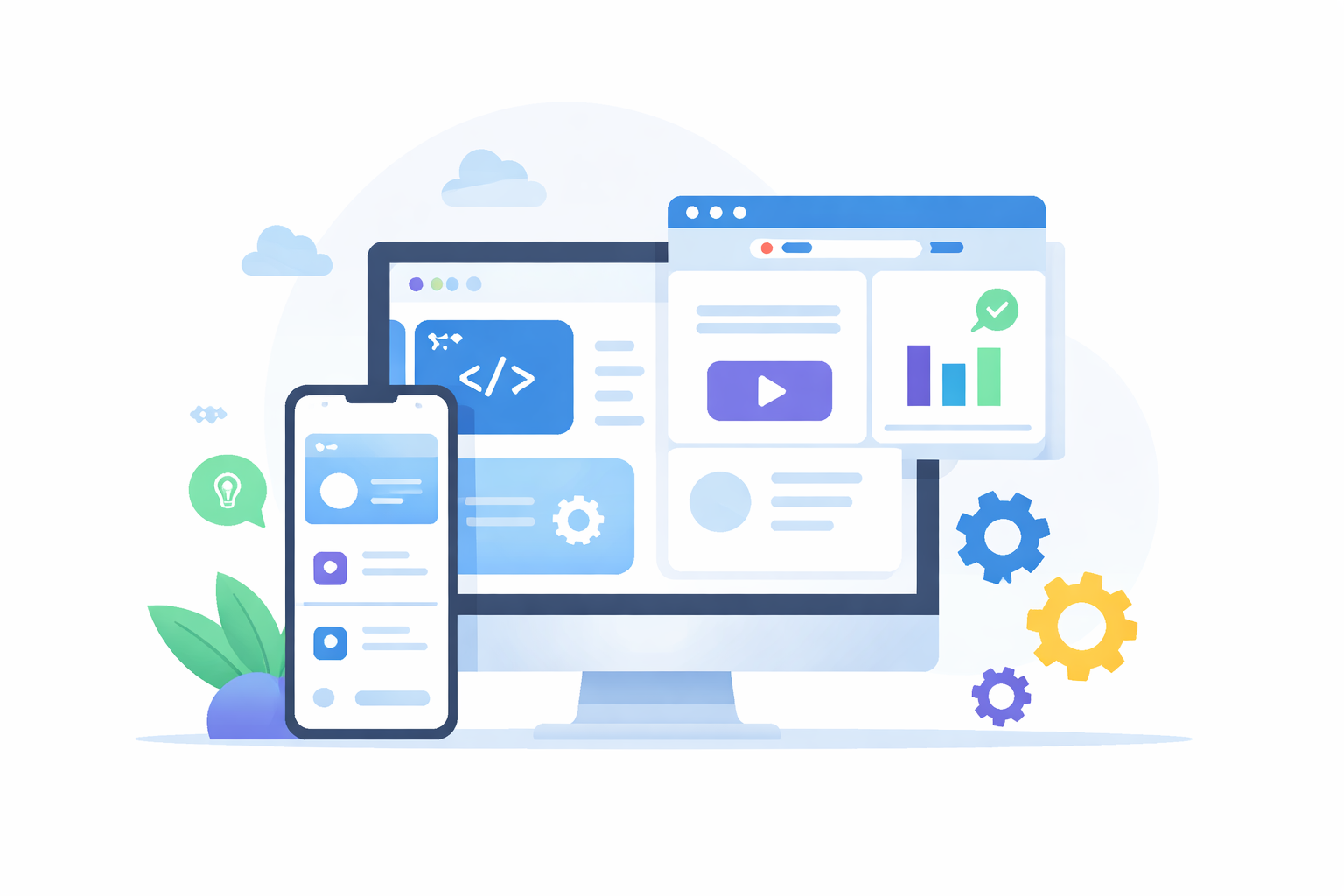
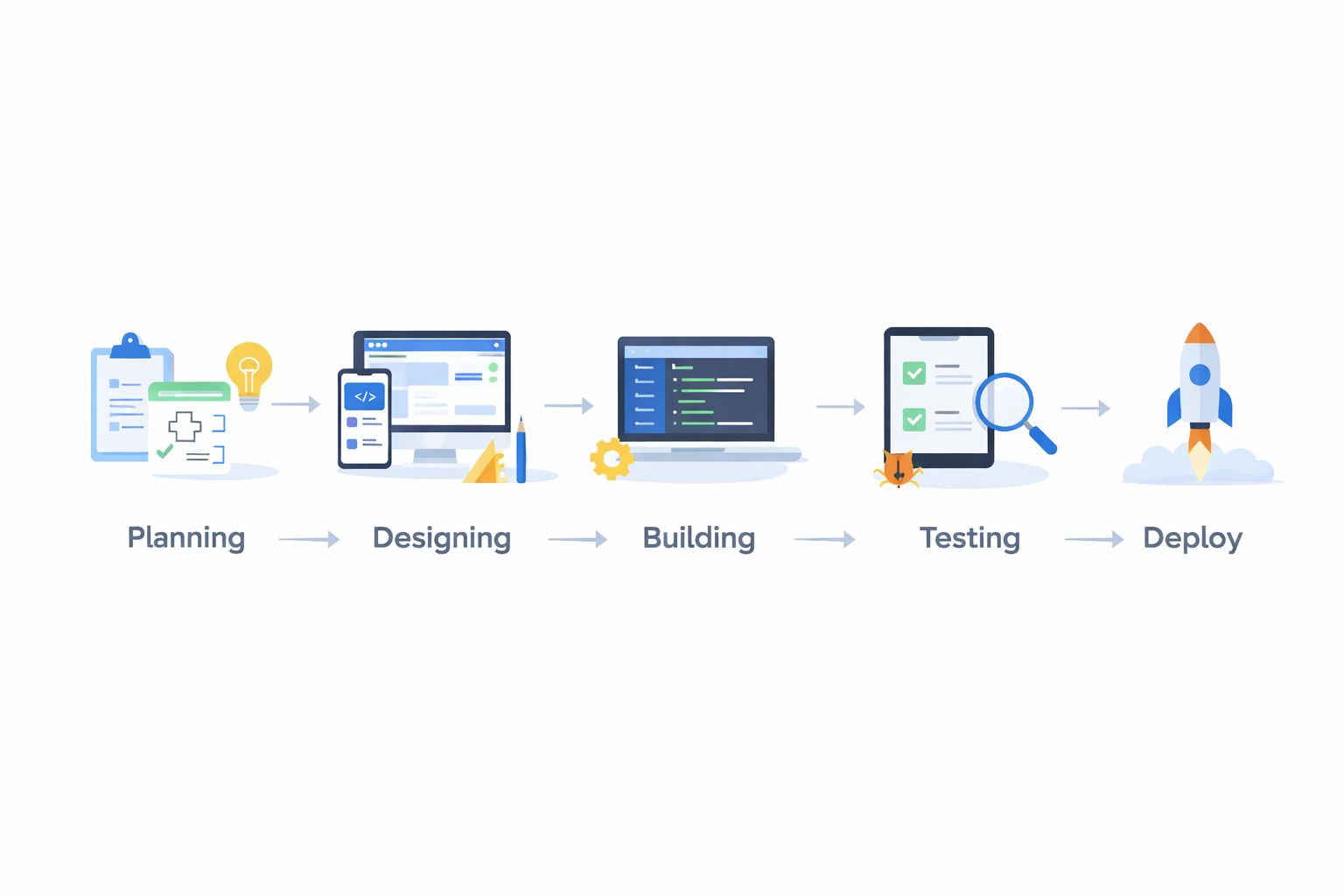
Application development involves creating software applications that run on various devices. The process includes several stages, such as planning, designing, building, testing, and deploying applications. Each stage requires careful consideration and collaboration between developers, designers, and stakeholders to ensure the final product meets the intended objectives. It can be tailored to suit specific business needs, making it a powerful tool for any enterprise. As technology evolves, so do the methodologies and tools used in application development, pushing the boundaries of what’s possible and enabling more efficient and effective solutions.
Web Application Development
Web application development focuses on creating applications that operate through web browsers. These apps are designed to be responsive and accessible across different devices, ensuring a seamless user experience. As internet access becomes more ubiquitous, the importance of web applications in reaching a global audience cannot be overstated. In cities like Chicago, there is a growing demand for web application development services, catering to diverse industries from healthcare to retail. Businesses are increasingly seeking ways to differentiate themselves through unique features and enhanced user interfaces that web applications can offer.
Key Technologies
The world of web development is rich with technologies. Some of the popular choices include:
- Node.js: Known for its efficiency and scalability, Node.js is a preferred choice for web application development services. It allows for building fast, networked applications that can handle a large number of simultaneous connections with high performance.
- Progressive Web Apps (PWAs): These offer an app-like experience on the web, combining the best features of web and mobile applications. PWAs are designed to work offline and provide push notifications, bridging the gap between web pages and mobile apps.
- Custom Web Application Development: Tailored solutions that address specific business needs, often involving a combination of cutting-edge web tech. Custom development enables businesses to create unique, feature-rich applications that align closely with their strategic goals and customer expectations.
Mobile Application Development
Mobile apps are designed for smartphones and tablets, offering users the convenience of accessing services on the go. This category can be divided into native, hybrid, and no-code app builders. Mobile applications are essential for businesses aiming to enhance their accessibility and engagement with users who prefer mobile devices over desktops. As mobile usage continues to rise, developing an effective mobile application has become a critical component of many business strategies.
Native vs. Hybrid App Builders
- Native Mobile App Builders: These are designed specifically for a platform, such as iOS or Android. They offer superior performance and a more integrated user experience, leveraging the full capabilities of the device’s hardware and operating system.
- Hybrid App Builders: Built using web technologies, these apps can run on multiple platforms, though they may not offer the same performance level as native apps. Hybrid applications offer a cost-effective solution for businesses looking to maintain a presence across multiple platforms with a single codebase.
No-Code App Builders
For those without a deep programming background, no-code app builders offer a valuable alternative. Platforms like nandbox enable users to create applications with zero coding knowledge, democratizing the app development process. This approach empowers small businesses and entrepreneurs to develop and deploy applications quickly without the need for extensive technical expertise. No-code platforms are continually evolving, offering more robust features and integrations to meet the growing demands of users.
Choosing the Right Development Path
Selecting the right approach for your project depends on various factors, such as budget, timeline, and technical requirements. It’s crucial to assess the specific needs of your business and the expectations of your users before deciding on a development path. Here are some considerations to keep in mind:
Custom vs. Off-the-Shelf Solutions
- Custom Solutions: Provide tailored features and functionalities, allowing businesses to align the application with their specific needs. Custom solutions are ideal for companies that require unique capabilities or have complex workflows that cannot be addressed by standard software.
- Off-the-Shelf Solutions: Ready-made applications that offer quick deployment and lower initial costs, but may lack customization options. These solutions are suitable for businesses with straightforward requirements and limited budgets, providing a quick way to get started with digital applications.
Enterprise Web Application Development
For larger organizations, enterprise web application development is crucial. These applications support complex business processes and require robust architecture and security measures. Enterprise applications often need to integrate with existing systems and scale to accommodate growing user bases, making their development a sophisticated endeavor.
Key Benefits
- Improved Operational Efficiency: Streamlining processes and automating tasks can lead to significant productivity gains for businesses.
- Enhanced Data Management and Analytics: Applications can provide valuable insights into user behavior and business operations, aiding in strategic decision-making.
- Scalable Infrastructure to Support Growth: As businesses expand, their applications must scale seamlessly to support increased demand and new functionalities.
The Role of Web App Design
An application’s success heavily depends on its design. Web app design focuses on user experience (UX) and user interface (UI) to ensure the application is intuitive and engaging. A well-designed app facilitates easy navigation and a seamless user journey, which is crucial for retaining users. Investing in good design not only enhances user satisfaction but also builds brand credibility and loyalty.
Essential Design Elements
- Responsive Design: Ensures the app functions well across various devices and screen sizes, providing a consistent experience for all users.
- Intuitive Navigation: Simplifies user interactions, making it easy for users to find what they need and perform tasks efficiently.
- Aesthetic Appeal: Visual elements play a significant role in creating a positive first impression, influencing user perception and engagement. A cohesive and attractive design can significantly impact the perceived value of an application.

The Future of Application Development
As technology evolves, so too does the landscape of application development. Emerging trends and innovations are set to shape the future of this field, offering new opportunities for businesses to enhance their applications and services.
Progressive Web Application Development Companies
Progressive web applications are gaining traction due to their ability to deliver fast, reliable, and engaging user experiences. These apps combine the best of web and mobile technologies, offering offline capabilities and push notifications. As more businesses recognize the benefits of PWAs, the demand for companies specializing in their development is expected to grow, driving further innovation in this space.
Healthcare Web Application Development
The healthcare industry is leveraging web applications to improve patient care and streamline operations. From telemedicine platforms to patient management systems, healthcare web application development is transforming the way healthcare providers interact with patients and manage information. These applications not only enhance access to care but also improve the efficiency of healthcare delivery, making them an essential component of modern healthcare infrastructure.
Conclusion
In conclusion, web and mobile application development is a multifaceted field that offers numerous opportunities for businesses to enhance their digital presence. Whether you’re considering bespoke web application development or exploring no-code app builders, the key is to align your development strategy with your business goals and user needs. By doing so, you can create powerful, user-friendly applications that drive engagement and support your long-term success.
As you embark on your development journey, keep in mind the importance of selecting the right technologies, focusing on user-centric design, and staying informed about industry trends. With the right approach, you’ll be well-equipped to navigate the complexities of application development and achieve your desired outcomes. As the digital landscape continues to evolve, staying agile and open to new ideas will be crucial in maintaining a competitive edge.
Frequently Asked Questions
What’s the difference between web apps, PWAs, native mobile apps, and hybrid apps?
Web apps run in browsers and are designed to be responsive across devices, making them ideal for broad, global reach without installation. Progressive Web Apps (PWAs) are web apps enhanced with app-like capabilities—offline use, push notifications, and fast, reliable experiences—bridging web and mobile benefits. Native mobile apps are built specifically for iOS or Android, offering top performance and deep access to device features. Hybrid apps use web technologies wrapped for multiple platforms, trading some performance for faster, more cost-effective cross-platform delivery.
How should I choose between custom development, off-the-shelf software, and no-code builders?
Let your budget, timeline, and requirements guide you. Choose custom development when you need unique features, complex workflows, or tight alignment with business goals—ideal for differentiation and long-term scalability. Opt for off-the-shelf solutions when you need quick deployment and lower upfront costs for straightforward needs, accepting limited customization. Use no-code builders (e.g., platforms like Nandbox) when speed and minimal engineering resources are priorities; they empower non-developers to launch quickly, with growing feature sets, but may impose platform constraints as complexity increases.
When does a Progressive Web App (PWA) make more sense than a native app?
Pick a PWA when you want a single codebase that reaches users across devices via the browser, with app-like features such as offline access and push notifications. PWAs are strong for content- or service-driven experiences where installation friction should be minimal and budgets favor web-first development. If you require the highest performance or deep, platform-specific hardware integration, a native app is typically the better fit.
What sets enterprise web application development apart from standard projects?
Enterprise apps must support complex processes with robust architecture and strong security, integrate seamlessly with existing systems, and scale to large and growing user bases. This elevates demands on reliability, maintainability, and performance, making planning, design, and testing more sophisticated to ensure efficiency gains, better analytics, and scalable infrastructure that supports business growth.
Why is UX/UI design so critical, and what elements should I prioritize?
Design drives adoption, retention, and brand credibility. Prioritize responsive design for consistency across devices, intuitive navigation to reduce friction and speed task completion, and cohesive aesthetics to create a strong first impression and sustained engagement. A user-centered design approach turns features into delightful, efficient experiences that meet user expectations and business objectives.