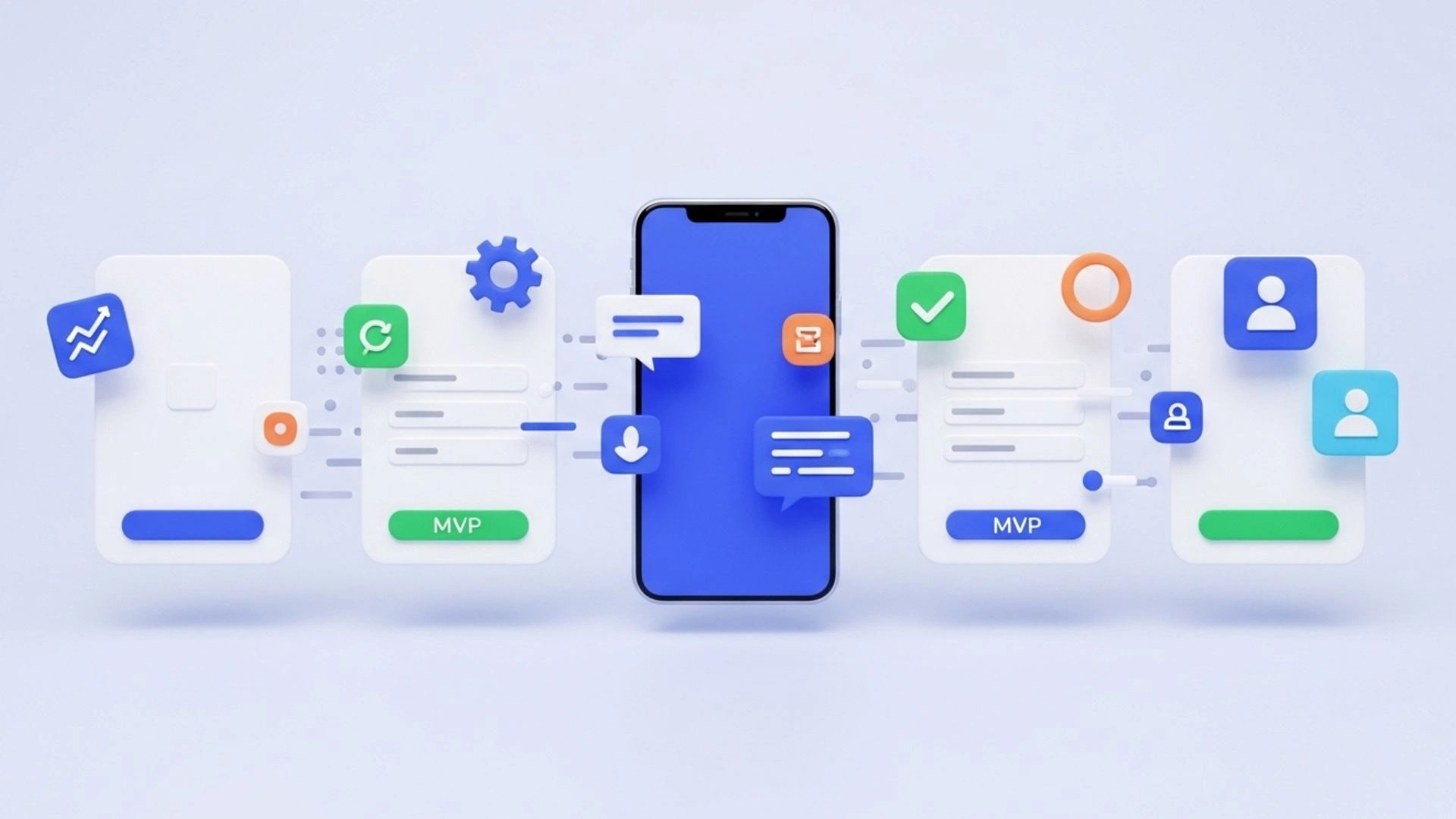
In the rapidly evolving world of technology, launching a full-fledged app without validating its core concept can be a risky move. The tech landscape is littered with products that failed because they did not address real user needs or were not effectively tested before full launch. This is where an MVP, or Minimum Viable Product, becomes crucial. Modern MVP apps can now be built using AI-powered no-code platforms which streamline the development process and make app creation accessible to those without extensive coding skills. This approach contrasts with traditional custom development, where developers write code from scratch, often requiring more time and resources. An MVP allows startups to test their ideas with minimal investment, gather valuable user feedback, and iterate based on real-world insights. Not only does it serve as a practical first step, but it also acts as a litmus test for your concept’s viability in a competitive market.
In this guide, we’ll walk you through the steps of building an MVP app, covering everything from design to testing, ensuring that you are well-equipped to embark on this crucial journey.

The MVP is not just a tool for startups but is also beneficial for established businesses looking to test new ideas. It provides a framework to explore market potential and user engagement without the overhead of developing a complete application. By concentrating on a minimal feature set, companies can reduce the time-to-market, thus gaining a competitive edge. Moreover, the feedback loop created by real-world usage of an MVP is invaluable, allowing for data-driven decisions that enhance the product’s future iterations. Understanding the essence of an MVP is crucial as it sets the stage for a systematic approach to app development that is both efficient and effective.
The Importance of Building an MVP
Building an MVP app offers several advantages, particularly for startups. Here’s why it’s essential:
- Cost-Effective: Developing a full-featured app can be costly. An MVP helps you minimize expenses by focusing on core functionalities. By investing only in what is necessary, you conserve resources that can be allocated to other critical areas like marketing or future development. This financial prudence is especially important for startups operating with limited budgets and tight timelines.
- Risk Reduction: Testing your concept with an MVP reduces the risk of launching a product that doesn’t meet market needs. By validating your idea early on, you can avoid the costly mistake of building a product based on assumptions. This risk mitigation strategy allows you to pivot or adjust your approach based on user feedback, ensuring that your final product is more aligned with market demands.
- User Feedback: An MVP enables you to gather user feedback early in the development process, which can guide future iterations. User insights are invaluable as they provide a real-world perspective on the app’s usability and functionality. Engaging with users at this stage helps in creating a product that resonates with the target audience, ultimately fostering a stronger user base.
- Faster Time-to-Market: By focusing on the essential features, you can get your product to market quicker. Speed is often a critical factor in the tech industry, where being the first mover can result in significant competitive advantages. An MVP allows you to capture market share early, establishing your presence and building brand recognition before more comprehensive versions of the app are released.
Steps to Build an MVP App
Step 1: Define Your App’s Core Purpose
Before diving into development, clearly define the problem your app aims to solve. Consider conducting market research to identify the needs and pain points of your target audience. This will help you prioritize the features that are essential for your MVP. Understanding the core purpose of your app sets a solid foundation for development, ensuring that every decision made aligns with solving the identified problem.
Having a well-defined purpose not only guides the development process but also helps in creating a compelling narrative around your product. It enables you to articulate the app’s value proposition clearly to potential users and stakeholders. This clarity is crucial when pitching to investors or marketing your app, as it highlights the unique benefits your solution offers. By anchoring your app’s development to a clear purpose, you ensure that it remains user-centric and focused on delivering real value.
Step 2: Identify Key Features
Focus on the core functionalities that address your users’ primary needs. Avoid unnecessary features that don’t contribute to solving the main problem. This is where the concept of “lean startup MVP” comes into play, emphasizing the importance of staying lean and efficient. By concentrating on essential features, you create a streamlined product that offers maximum impact with minimal complexity.
Identifying key features requires a deep understanding of your target audience and their specific challenges. Engage with potential users through surveys, interviews, or focus groups to gather insights into what features would be most valuable to them. This user-centered approach ensures that your MVP is not only functional but also meaningful to its intended audience. By resisting the temptation to overload your MVP with features, you maintain focus on delivering a high-quality experience that effectively addresses the core problem.
Step 3: Design the User Experience
A great user experience is crucial for the success of your MVP. Work with an app development company that specializes in UX/UI design for MVP implementation. Ensure that the design is intuitive and aligns with your app’s core purpose. A well-designed user interface can significantly enhance user satisfaction and engagement, leading to higher retention rates and positive word-of-mouth.

Investing in UX/UI design at the MVP stage sets the tone for your app’s overall aesthetic and functionality. It helps in creating a seamless experience that guides users effortlessly through the app, minimizing friction and maximizing usability. Prioritizing design also signals to users that you value their experience, which can build trust and credibility. By focusing on UX/UI design early, you lay the groundwork for a scalable and adaptable interface that can evolve with the app’s future iterations.
Step 4: Choose the Right Development Approach
When it comes to development, you have a few options:
- Custom MVP App Development: Engage with custom MVP app development services to tailor the app to your specific needs. This approach offers flexibility and control over the development process, ensuring that the final product aligns perfectly with your vision. Custom development is ideal for unique app concepts that require specialized functionality.
- Agile MVP Development: Utilize agile methodologies to allow for flexibility and iterative improvements. Agile development fosters a collaborative environment where feedback is continuously integrated, enabling rapid adjustments and enhancements. This approach is particularly effective for MVPs as it supports the dynamic nature of early-stage product development.
- Prototype App Development: Create a prototype to visualize and test the app’s design and functionality before full-scale development. Prototyping allows you to experiment with different design elements and user flows, providing valuable insights into the app’s usability. It serves as a practical tool for refining your concept and ensuring that it meets user expectations before committing to full development.
- No-Code and AI-Powered MVP Development: No-code platforms have transformed the app development landscape by enabling founders to build MVP apps without any coding expertise. These platforms often provide intuitive drag-and-drop interfaces, allowing users to design and customize their applications visually. Some no-code solutions, like nandbox, take this a step further by generating fully native iOS and Android apps, ensuring that users can deliver high-quality products across major mobile platforms without the need for intricate programming.
The benefits of adopting no-code and AI-powered solutions for MVP development are significant. First, they dramatically lower the cost of app creation, making it more accessible for startups and entrepreneurs with limited budgets. Additionally, these platforms facilitate a faster launch, allowing founders to bring their ideas to market in a fraction of the time compared to traditional development methods. Furthermore, with native app generation, users can seamlessly publish their apps on the App Store and Google Play, reaching potential customers quickly and efficiently. This streamlined process supports innovation and experimentation, enabling businesses to validate their ideas while minimizing risk.
Step 5: Develop the MVP
With your design and development plan in place, it’s time to build the MVP. Collaborate with an experienced MVP app development company to ensure that the app is built efficiently and effectively. Focus on delivering the core features, ensuring they function smoothly. This stage requires meticulous attention to detail, as even minor issues can affect user perception and app performance.
The development phase is also an opportunity to establish a strong technical foundation for your app. Ensure that your codebase is clean and well-documented, facilitating future updates and scaling efforts. By prioritizing quality during development, you create an MVP that not only meets current user needs but is also equipped to evolve with future demands. This approach sets the stage for a successful product launch and continued growth.
Step 6: Test Your MVP
Testing is a crucial part of the MVP development process. Implement MVP testing methods to evaluate the app’s performance and usability. Collect feedback from real users to identify areas for improvement. Testing should be thorough, covering functional, usability, and performance aspects to ensure a well-rounded evaluation of the app’s readiness for market.

Engaging with a diverse group of testers provides a wide range of perspectives, highlighting potential issues that might have been overlooked. This feedback is invaluable for making data-driven decisions about necessary changes and enhancements. Testing also helps in building user trust, as it demonstrates a commitment to quality and responsiveness to user needs. By rigorously testing your MVP, you lay the groundwork for a successful launch and ongoing user satisfaction.
Step 7: Launch and Gather Feedback
Once your MVP is tested and refined, it’s time to launch. Release the app to a select group of users and gather their feedback. Pay attention to their suggestions and any issues they encounter, as this information will guide future iterations. A successful launch is not just about going live; it’s about creating an ongoing dialogue with your users that informs the app’s evolution.
Launching your MVP to a targeted audience allows you to control the initial user experience and gather focused insights. This strategic approach helps in managing expectations and building a community of early adopters who can champion your app. By actively engaging with users post-launch, you create a feedback loop that is vital for continuous improvement and adaptation to changing market demands.
Step 8: Iterate and Improve
Based on user feedback, make necessary improvements to your app. This iterative process is vital for refining your app and ensuring it meets the needs of your target audience. Continue to develop and expand the app’s features based on validated insights. Iteration is not a one-time event but an ongoing commitment to enhancing user experience and staying relevant in a competitive market.
Prioritizing user feedback in your iteration process ensures that your app remains user-centric and aligned with market needs. This approach fosters a culture of continuous learning and adaptation, which is crucial for long-term success. By embracing iteration, you demonstrate a commitment to delivering value to your users, building loyalty and trust that can drive sustained growth and engagement.
MVP Development Options Compared
| Approach | Cost | Speed | Technical Skill Required | Best For |
|---|---|---|---|---|
| Custom Development | High | Moderate | High | Unique app concepts requiring flexibility |
| Agile Team | Moderate to High | Fast | Moderate to High | Projects needing iterative feedback |
| No-Code Builder (e.g., nandbox) | Low | Very Fast | None | Startups wanting to launch quickly |
Key Considerations for MVP Development
- Collaborate with Experts: Partner with app development agencies specializing in MVP development services for end-to-end mobile and web app creation. Their expertise can provide valuable insights and guidance throughout the development process, ensuring a high-quality MVP that meets your strategic goals.
- Focus on Scalability: While your MVP is minimal, ensure that the architecture allows for future scalability. Designing with scalability in mind prevents costly redesigns and redevelopment as your user base grows. This forward-thinking approach ensures that your app can adapt to increased demand and new features seamlessly.
- Prioritize User Feedback: User feedback is invaluable. Use it to guide your development decisions and feature enhancements. By actively listening to your users, you create a product that resonates with their needs and preferences, fostering loyalty and advocacy.
- Stay Lean: Adhere to the principles of lean startup MVP by minimizing waste and focusing on delivering value to users. A lean approach ensures that resources are used efficiently, maximizing impact and reducing unnecessary expenditures.
Conclusion
Building an MVP app is a strategic approach to app development that allows startups to validate their ideas with minimal investment. By focusing on core functionalities, gathering user feedback, and iterating based on real-world insights, you can create a product that truly meets the needs of your audience. Whether you’re working with custom MVP app development services or leveraging agile MVP development methodologies, the key is to stay focused, agile, and responsive to user feedback.
By following the steps outlined in this guide, you’ll be well on your way to launching a successful MVP app that lays the foundation for future growth and success. This strategic groundwork ensures that your app is not only viable but also poised for long-term impact in the competitive app marketplace.
Frequently Asked Questions
Why build an MVP before a full app?
An MVP lets you validate your idea with real users while conserving time and money. By launching only the essential features, you reduce development costs, lower the risk of building something the market doesn’t want, and get to market faster. The feedback loop from early users enables data-driven decisions, helping you refine your product and gain a competitive edge. This approach benefits both startups and established companies testing new ideas.
How do I decide which features go into the MVP?
Start by defining your app’s core purpose—the single problem you must solve for your target users. Use market research, surveys, interviews, or focus groups to understand user pain points, then prioritize only the features that directly address those primary needs. Stay lean by avoiding “nice-to-have” additions and focusing on a streamlined, high-impact experience that proves your value proposition.
How is an MVP different from a prototype and a full product?
An MVP is a working, minimal version of your app with only the essential features needed to solve a specific user problem and gather real-world feedback. A prototype is a pre-development model used to visualize and test design and user flows before building the product. A full product goes beyond core features, incorporating broader functionality and polish after the concept has been validated.
Which development approach should I use for my MVP?
Choose based on your goals and stage: use custom MVP app development if you need tailored functionality and tight control; adopt agile MVP development to iterate quickly with continuous feedback; leverage prototype app development to test and refine design and flows before full build. Collaborating with experts—especially those strong in UX/UI for MVPs—can improve quality and speed.
Can I build an MVP app without coding?
Yes, AI-powered no-code platforms allow you to build an MVP app without any coding knowledge. Platforms like nandbox enable users to create fully native apps easily. Additionally, for those needing advanced customization, these platforms often provide access to WebSocket APIs, enhancing functionality while remaining user-friendly.