In recent years, artificial intelligence (AI) has revolutionized many industries, and coding is no exception. AI-assisted coding tools are transforming the way developers write, debug, and optimize code. These tools are not just about automation; they enhance creativity and efficiency, enabling developers to focus on more complex tasks. For many teams, coding with AI through modern AI development tools and AI programming tools is now part of everyday workflows.
In this article, we’ll explore the top AI coding tools of 2026, their benefits, and how they’re shaping the future of programming. Below, we compare the top AI coding tools of 2026 and highlight best AI coding tools for different needs the best AI coding tools for different needs.
The Rise of AI Coding Tools
AI coding tools have gained momentum due to their ability to automate repetitive tasks, suggest code improvements, and even generate code snippets. This surge in AI-assisted coding is driven by machine learning algorithms that learn from vast codebases to provide accurate suggestions and optimizations. In practice, machine learning coding techniques power many automated coding tools that surface context-aware suggestions and accelerate reviews.
As AI development tools continue to evolve, they are not only assisting developers but also expanding access to software creation. In addition to AI coding assistants used inside IDEs, newer platforms combine artificial intelligence with no-code development environments. Tools such as nandbox AI-powered app builder demonstrate how conversational AI can translate feature descriptions into fully functional native mobile apps, allowing teams to prototype and launch applications without writing traditional code.
Why AI in Coding?
AI in coding offers several advantages:
- Efficiency: Automates mundane tasks with automated coding tools, allowing developers to focus on complex problems.
- Accuracy: Reduces errors by providing real-time code analysis and suggestions.
- Creativity: Inspires developers with innovative solutions and code patterns.
Top AI Coding Tools of 2026
1. OpenAI Codex
OpenAI Codex, the technology behind GitHub Copilot, is a powerful AI tool that assists developers by suggesting entire lines of code or functions in real-time. It supports multiple programming languages and integrates seamlessly into popular IDEs.
2. Tabnine
Tabnine is an AI-powered code completion tool that predicts and suggests the next lines of code. It uses deep learning models trained on millions of open-source projects, making it highly accurate and context-aware.
3. Kite
Kite is an AI coding assistant that helps developers write code faster by providing intelligent code completions and documentation in real-time. It supports over a dozen programming languages and integrates with popular IDEs. and integrates with popular IDEs.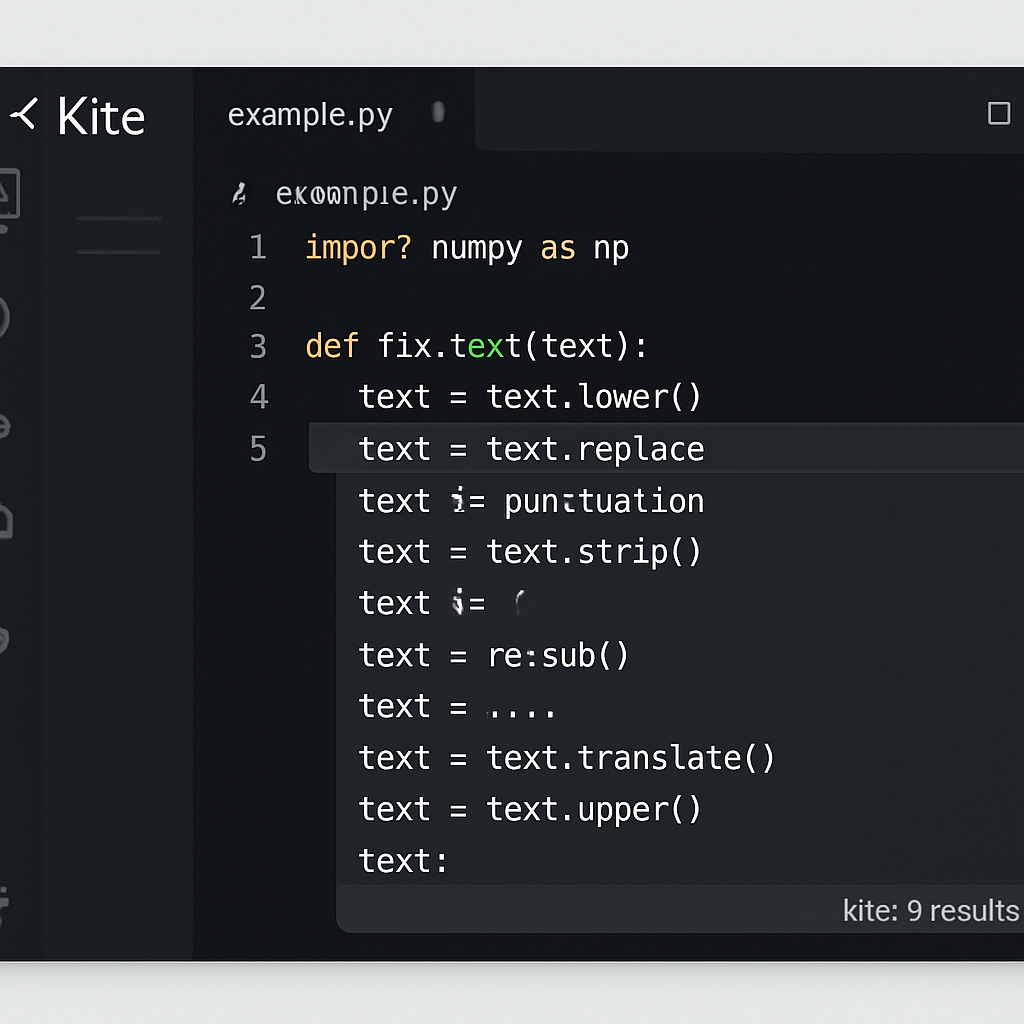
4. DeepCode
DeepCode is an AI-powered code review tool that identifies bugs and vulnerabilities in your codebase. It uses machine learning to analyze code and provide insights into potential issues, helping developers maintain high-quality code.
5. PyCharm with AI Integration
PyCharm, a popular Python IDE, now offers AI integration that enhances code completion and refactoring features. This integration leverages machine learning to provide more accurate suggestions and automate repetitive coding tasks. For Python specialists seeking the best Python AI coding tools, PyCharm’s AI-powered features are especially useful.
AI in Medical Coding Automation
AI is making significant strides in the medical field, particularly in coding automation. AI software tools for medical coding automate the process of translating medical records into standardized codes used for billing and documentation. Hospitals and revenue cycle teams increasingly evaluate the best AI software tools for medical coding automation to streamline claims and audits.
Benefits of AI in Medical Coding
- Speed: Automates code generation, reducing the time spent on manual coding.
- Accuracy: Minimizes errors by using machine learning to analyze medical records.
- Compliance: Ensures codes are up-to-date with the latest medical standards.
AI Coding Assistants and Enterprise Solutions
AI coding assistants are not limited to individual developers; they also offer enterprise solutions that reduce tech-support tickets and streamline software development processes.
Reducing Tech-Support Tickets
AI coding tools can analyze support tickets and suggest code changes or optimizations that prevent similar issues in the future. This proactive approach reduces the volume of tickets and improves customer satisfaction. Many organizations find that AI coding tools reduce tech-support tickets enterprise-wide by enabling proactive fixes and better knowledge sharing.
Enhancing Software Development
AI tools assist in various stages of software development, from design to deployment. They provide insights into best practices, optimize code for performance, and ensure that code adheres to industry standards. This accelerates AI software development initiatives and complements existing AI development tools.
by Desola Lanre-Ologun (https://unsplash.com/@disruptxn)
Challenges and Overreliance on AI Coding Tools
While AI coding tools offer numerous benefits, there are challenges to consider. Overreliance on AI can lead to a lack of understanding of fundamental coding principles. Developers must balance using AI tools with honing their coding skills.
The Anthropic Claude AI Outage
A recent outage of Anthropic’s Claude AI highlighted the risks of overreliance on AI tools. The outage disrupted development processes and underscored the importance of having robust backup systems in place. As some headlines summarized it, the Anthropic Claude AI outage reveals overreliance on AI coding tools across teams.
The Future of AI Programming Tools
AI programming tools are evolving rapidly, with new features and capabilities being introduced regularly. As these tools become more sophisticated, they will continue to transform the coding landscape.
Innovations on the Horizon
- Agentic AI Coding Tools: These tools will autonomously write and debug code, further reducing the need for manual intervention.
- AI Code Generators: Future AI code generators will create entire applications based on high-level specifications.
Beyond traditional IDE plugins, AI is also expanding into AI-powered no-code app builders. Platforms such as nandbox offer an App Builder GPT that combines conversational AI with no-code development, allowing users to describe app features in natural language and generate fully functional native iOS and Android apps. This approach lowers the barrier to entry for software creation and allows teams to prototype and deploy applications much faster.
Conclusion
AI-assisted coding tools are reshaping the way developers work, offering unprecedented efficiency and accuracy. While challenges exist, the benefits of AI in coding are undeniable. As we move forward, these tools will become an integral part of the development process, driving innovation and enhancing productivity. Whether you are coding with AI, experimenting with agentic AI coding tools, or evaluating AI code generators and other AI development tools, there has never been a better time to modernize your workflow.
Embrace the future of coding with AI, and discover how these tools can elevate your development workflow.
Frequently Asked Questions
Which AI coding tools stand out in 2026, and what do they do?
The article highlights five notable tools, each excelling at different tasks. OpenAI Codex (the tech behind GitHub Copilot) suggests entire lines or functions in real time across many languages and IDEs. Tabnine predicts next lines of code using deep learning trained on large open-source corpora, making it highly context-aware. Kite offers intelligent completions and in-line documentation for 12+ languages with seamless IDE integration. DeepCode focuses on AI-powered code review, spotting bugs and vulnerabilities to keep code quality high. PyCharm’s AI integration enhances completion and refactoring, using machine learning to improve suggestions and automate repetitive tasks. For Python-focused teams comparing the best Python AI coding tools, PyCharm is a strong option to consider.
How can AI coding assistants help enterprises reduce support tickets and streamline development?
They proactively analyze support tickets to spot recurring issues and recommend code changes that prevent repeats, lowering ticket volume and boosting customer satisfaction. Beyond support, they assist from design through deployment by surfacing best practices, optimizing performance, and ensuring adherence to industry standards, which collectively speeds delivery and improves software quality. This approach supports broader AI software development efforts.
How is AI being used for medical coding automation, and what are the benefits?
AI tools automate translating medical records into standardized billing and documentation codes. This brings three key benefits: speed (faster code generation), accuracy (fewer errors through machine-learning analysis of records), and compliance (keeping codes aligned with the latest medical standards). Many organizations now compare the best AI software tools for medical coding automation to improve throughput.
What challenges come with relying on AI coding tools, and how can teams prepare for outages
Overreliance can erode understanding of core coding principles, so developers should balance AI assistance with continuous skill-building. The recent Anthropic Claude AI outage showed how disruptions can impact development, underscoring the need for robust backup systems and contingency plans to maintain productivity when AI tools are unavailable.
What innovations are on the horizon for AI programming tools?
Two big trends are emerging. Agentic AI coding tools aim to autonomously write and debug code, further reducing manual intervention. AI code generators are moving toward building entire applications from high-level specifications, accelerating development from idea to implementation. Additionally, AI-powered no-code app builders, such as nandbox App Builder GPT, are making it easier for teams to iterate quickly.